GUMROAD eBook link:-
BY SHAILENDRA KUMAR VERMA
| Affiliate link of GUMROAD eBook | |
| https://skverma29.gumroad.com/affiliates | |
| 1. | CHALLENGING SYLLOGISM |
| https://skverma29.gumroad.com/l/ktxvzi | |
| 2. | STRAIT OF HORMUZ: STRATEGIC & ECONOMIC ROLE |
| https://skverma29.gumroad.com/l/upobrv | |
| 4. | STATIC GENERAL KNOWLEDGE |
| https://skverma29.gumroad.com/l/kzmca | |
| 5. | SSC ENGLISH PREVIOUS YEAR QUESTIONS MCQ |
| https://skverma29.gumroad.com/l/vtotyp | |
| 6. | SSC REASONING PREVIOUS YEAR QUESTIONS MCQ |
| https://skverma29.gumroad.com/l/fsyvp | |
| 7. | SSC MATH PREVIOUS YEAR QUESTIONS (MCQ): TIER I |
| https://skverma29.gumroad.com/l/nesioq | |
| 8. | BANKING KNOWLEDGE QUESTIONS AND ANSWERS MCQ |
| https://skverma29.gumroad.com/l/sgbbul | |
| 9. | BIHAR ANM, GNM & PHARMACIST EXAM: PAST MCQ QUESTIONS & ANSWERS – |
| https://skverma29.gumroad.com/l/yotjat | |
| 10. | ARAVALLI MOUNTAIN RANGE: THE ANCIENT SPINE OF INDIA |
| https://skverma29.gumroad.com/l/khpakf | |
| 11. | मौर्य काल (322 ईसा पूर्व – 185 ईसा पूर्व): पीएसयू परीक्षा हेतु प्रश्नोत्तर सहित विस्तृत अध्ययन |
| https://skverma29.gumroad.com/l/kgmrw | |
| 12. | VOLCANOES AND EARTHQUAKES: A COMPLETE GUIDE |
| https://share.google/gMZLAnx4hcCV82NTI | |
| 13. | TERMINOLOGY: RAILWAY, COMPUTER, SHARE MARKET, BIOLOGY, BADMINTON, CRICKET, FOOTBALL, KABBADI AND HOCKEY |
| https://share.google/fvdFN53HtyXlqTCgd | |
| 14. | भारतीय संसद का सत्र: प्रक्रिया, नियमऔर एस ओ पी; पी एस यू परीक्षा के लिए संपूर्ण मार्ग दर्शिका |
| https://share.google/1HFwXZA3qUiKyrI1l | |
| 15. | REITs AND InvITs IN INDIA: COMPLETE GUIDE (SCOPE, RISKS & FUTURE) |
| https://share.google/EChDc9heQmPPeyhoi | |
| 16. | GK SSC TIER I PREVIOUS YEAR MCQ |
| https://share.google/5pLzqYKQtg822wk3Y | |
| 17. | PETROLEUM REFINERY PROCESS: WITH 200 MCQ |
| https://skverma29.gumroad.com/l/jgydi | |
| 18. | SET THEORY: A COMPLETE GUIDE WITH 400 MCQ |
| https://skverma29.gumroad.com/l/zkhqzm | |
| 19. | WORLD’S SMALLEST, LONGEST, THINNEST, THICKEST AND TALLEST |
| https://skverma29.gumroad.com/l/kzaenh | |
| 20. | HIGH TIDE AND LOW TIDE: A COMPLETE GUIDE https://skverma29.gumroad.com/l/virke |
| 21. | 1000 HISTORY QESTIONS & ANSWERS FOR PSU |
| https://skverma29.gumroad.com/l/fjapus | |
| 22. | नालंदा विश्वविद्यालय : सम्पूर्ण अध्ययन |
| https://skverma29.gumroad.com/l/pmjab?wanted=true | |
| 23. | भगवान शिव के 12 ज्योतिर्लिंग: इतिहास, महत्व और दर्शन क्रम |
| https://skverma29.gumroad.com/l/wdkgo | |
| 24 | NISM-SERIES-V-A MUTUAL FUND DISTRIBUTOR: COMPLETE STUDY GUIDE & EXAM PREPARATION |
| https://skverma29.gumroad.com/l/qgcviu | |
| 25. | WORKSHOP TECHNOLOGY & MANUFACTURING PROCESSES COMPLETE EXAM GUIDE |
| https://skverma29.gumroad.com/l/xvqxnp | |
| 26. | उगना महादेव और महाकवि विद्यापति |
| https://skverma29.gumroad.com/l/xjehig | |
AMAZON eBook link:-
BY SHAILENDRA KUMAR VERMA
| 1. | SSC MATH PREVIOUS YEAR MCQ: SSC MATH |
| https://amzn.in/d/097Ocsnl | |
| 2. | SSC REASONING PREVIOUS YEAR MCQ: SSC REASONING |
| https://amzn.in/d/00EHQGE8 | |
| 3. | SSC ENGLISH PREVIOUS YEAR MCQ: SSC ENGLISH |
| https://amzn.in/d/0f8sxJoy | |
| 4. | STATIC GENERAL KNOWLEDGE : WITH 620 MCQs |
| https://amzn.in/d/09xNEWmt |
PLAYSTORE eBook link:-
BY SHAILENDRA KUMAR VERMA
| 1. | SSC MATH PREVIOUS YEAR MCQ |
| https://share.google/KzWbvkFuNk51PEpiu | |
| 2. | SSC REASONING PREVIOUS YEAR MCQ |
| https://play.google.com/books/publish/a/12574378860292240754#book/GGKEY:EUPQZ9ZUAFR/review | |
| 3. | STATIC GENERAL KNOWLEDGE |
| https://play.google.com/books/publish/a/12574378860292240754#book/GGKEY:CQDT2G4CCQP/review | |
| 4. | CHALLENGING SYLLOGISM |
| https://share.google/w9xLMwyiJdNVnpHxI | |
| 5. | STRAIT OF HORMUZ: STRATEGIC & ECONOMIC ROLE |
| https://share.google/V10H7UKeTkstLIMmc | |
| 6. | BIHAR TEACHER ELIGIBILITY TEST (BIHAR TET) : COMPLETE GUIDE |
| https://share.google/AcCXPFa69dAWyYaZZ | |
| 7. | SSC ENGLISH PREVIOUS YEAR MCQ |
| https://share.google/pr7b0YhDoDwttaq2s | |
| 8. | BANKING KNOWLEDGE QUESTIONS AND ANSWERS MCQ |
| https://share.google/yqYOabKhNppcz89hl | |
| 9. | BIHAR ANM, GNM & PHARMACIST EXAM: PAST MCQ QUESTIONS & ANSWERS – |
| https://share.google/NFhtU1JoBfxPS4wa3 | |
| 10. | ARAVALLI MOUNTAIN RANGE: THE ANCIENT SPINE OF INDIA |
| https://share.google/Yo4RYnaZrbRu9qwzj | |
| 11. | GK SSC TIER I PREVIOUS YEAR MCQ |
| https://share.google/sBdCcsEeebM44QZ0X | |
| 12. | REITs AND InvITs IN INDIA: COMPLETE GUIDE (SCOPE, RISKS & FUTURE) |
| https://share.google/XAwUio1deUOxFe2M7 | |
| 13. | भारतीय संसद का सत्र: प्रक्रिया, नियमऔर एस ओ पी ; पी एस यू परीक्षा के लिए संपूर्ण मार्ग दर्शिका |
| https://share.google/6XVrfQ2PcuWmqvKol | |
| 14. | मौर्य काल (322 ईसा पूर्व – 185 ईसा पूर्व): पीएसयू परीक्षा हेतु प्रश्नोत्तर सहित विस्तृत अध्ययन |
| https://share.google/Lwu7JKHE54kxsL5e2 | |
| 15. | TERMINOLOGY: RAILWAY, COMPUTER, SHARE MARKET, BIOLOGY, BADMINTON, CRICKET, FOOTBALL, KABBADI AND HOCKEY |
| https://share.google/WWVO9ZFd81R9G9h69 | |
| 16. | VOLCANOES AND EARTHQUAKES: A COMPLETE GUIDE |
| https://share.google/aXi2evRVgmzpQguye | |
| 17. | PETROLEUM REFINERY PROCESS: WITH 200 MCQ |
| https://play.google.com/books/publish/u/0/a/12574378860292240754#book/GGKEY:P34SQBHUJ7F/review | |
| 18. | SET THEORY: A COMPLETE GUIDE WITH 400 MCQ |
| https://play.google.com/books/publish/u/0/a/12574378860292240754#book/GGKEY:83LKH7QHRQH/review | |
| 19. | WORLD’S SMALLEST, LONGEST, THINNEST, THICKEST AND TALLEST |
| https://play.google.com/books/publish/u/0/a/12574378860292240754#book/GGKEY:9LE49HEDZJE/review | |
| 20. | HIGH TIDE AND LOW TIDE: A COMPLETE GUIDE |
| https://play.google.com/books/publish/u/0/a/12574378860292240754#book/GGKEY:TKR79QBDE7R/review | |
| 21. | 1000 HISTORY QESTIONS & ANSWERS FOR PSU |
| https://play.google.com/books/publish/u/0/a/12574378860292240754#book/GGKEY:1SGWQKT7BDF/review | |
| 22. | नालंदा विश्वविद्यालय : सम्पूर्ण अध्ययन |
| https://play.google.com/books/publish/u/0/a/12574378860292240754#book/GGKEY:RY0EDLDK7TL/review | |
| 23. | भगवान शिव के 12 ज्योतिर्लिंग: इतिहास, महत्व और दर्शन क्रम |
| https://play.google.com/books/publish/u/0/a/12574378860292240754#book/GGKEY:KNT0X6L8YCQ/review | |
| 24. | NISM-SERIES-V-A MUTUAL FUND DISTRIBUTOR: COMPLETE STUDY GUIDE & EXAM PREPARATION |
| https://play.google.com/books/publish/u/0/a/12574378860292240754#book/GGKEY:YP1PQ8RQY07/review | |
| 25. | WORKSHOP TECHNOLOGY & MANUFACTURING PROCESSES COMPLETE EXAM GUIDE |
| https://play.google.com/books/publish/u/0/a/12574378860292240754#book/GGKEY:PK621P1ZHXX/review | |
| 26. | उगना महादेव और महाकवि विद्यापति |
| OPEN DMAT ACCONT FROM THI LINK IN ANGEL ONE:- |
| Open your Trading & Investment account with Angel One for FREE* |
| You will get: |
| All trades in Rs.20 |
| Quick SIP in Direct MF |
| 1Lac MTF @ 0% interest |
| Download only using my referral link to get Free Demat Account⬇ |
| https://angel-one.onelink.me/Wjgr/2o2au42h |
| _link may expire within 48hrs_ |
| _T&C Apply_ |
| CLICK TO APPLY: |
| Click the application link below: 👉 Apply Here for SBI Credit Card (Referral Code: 243zfQ0yYm3) |
| OPEN DMAT ACCOUNT FROM THIS LINK: |
| HI THERE, I SEE YOU HAVEN’T BOUGHT THE FREEDOM PLAN ON INDIAN BANK YET. DON’T MISS OUT ON UNLIMITED TRADING AT A POCKET-FRIENDLY COST. GO BROKERAGE-FREE AND SAVE BIG WITH THE FREEDOM PLAN. USE MY REFERRAL CODE, SHAI0634 TO DOWNLOAD THE APP NOW. |
| https://play.google.com/store/apps/details?id=com.finwizard.fisdom |
DISCLAIMER
This educational material is intended for examination preparation only. Questions presented as PYQs should be checked against official examination papers wherever available. Some questions may be paraphrased to improve clarity. GK GALAXY does not claim ownership of official examination papers and is not responsible for errors in unofficial or memory-based question compilations. Students should consult the official NEET-UG/NTA website and the prescribed NCERT textbook for verification.
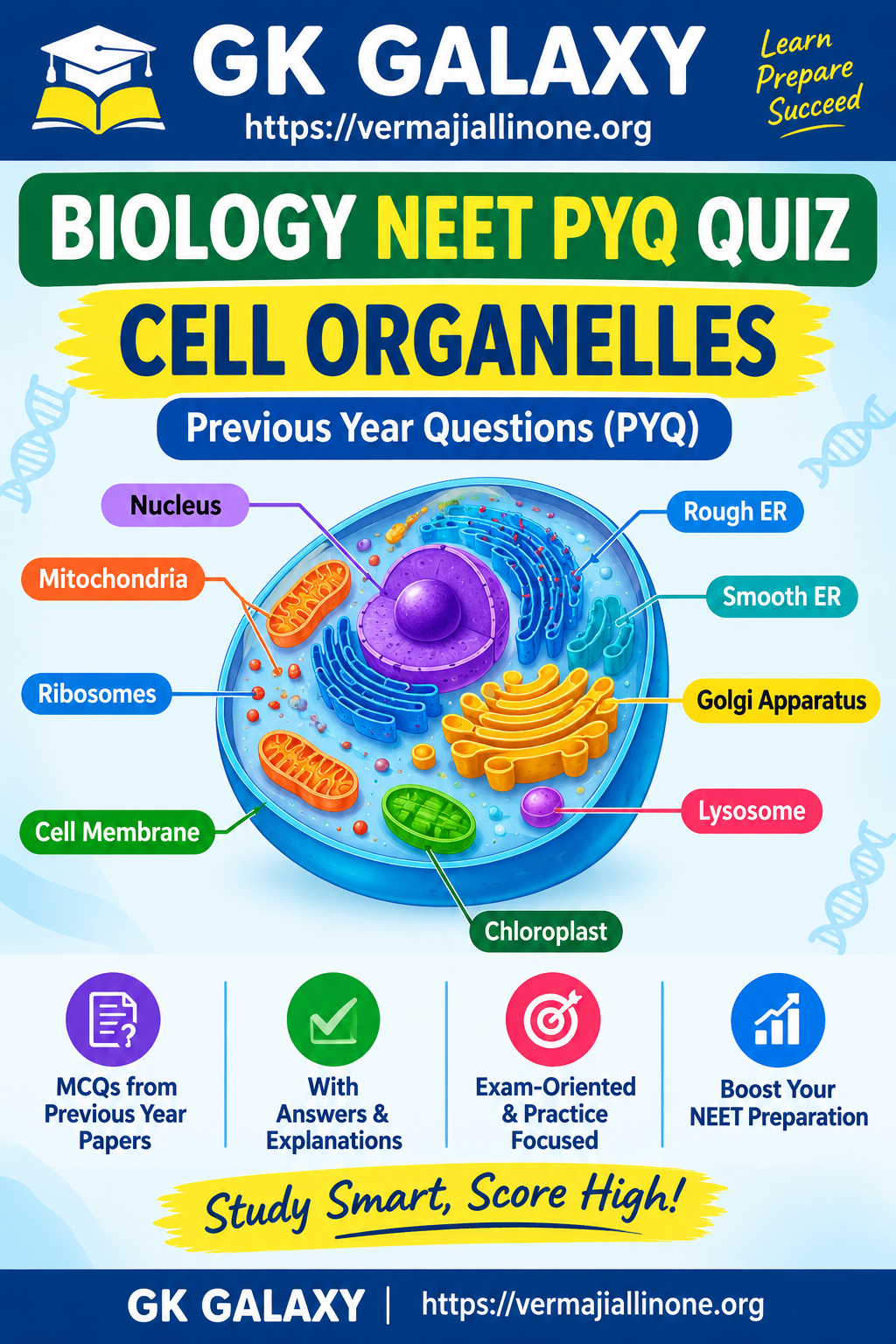
PART 1: COMPLETE THEORY OF CELL ORGANELLES
1. INTRODUCTION TO CELL ORGANELLES
Cell organelles are specialized structures inside cells that perform particular functions necessary for cellular survival, growth, energy production, synthesis, transport and waste removal.
The cell is the basic structural and functional unit of life. Different organelles work together to maintain cellular activities.
Cell organelles are broadly classified into:
Membrane-bound organelles: Endoplasmic reticulum, Golgi apparatus, lysosomes, mitochondria, plastids and peroxisomes.
Non-membranous structures: Ribosomes, nucleolus, centrioles and cytoskeletal elements.
Genetic control centre: Nucleus, which is surrounded by a double membrane in eukaryotic cells.
Prokaryotic cells lack a true membrane-bound nucleus and most membrane-bound organelles. Eukaryotic cells possess a well-organized nucleus and various specialized organelles.
2. Cell Membrane
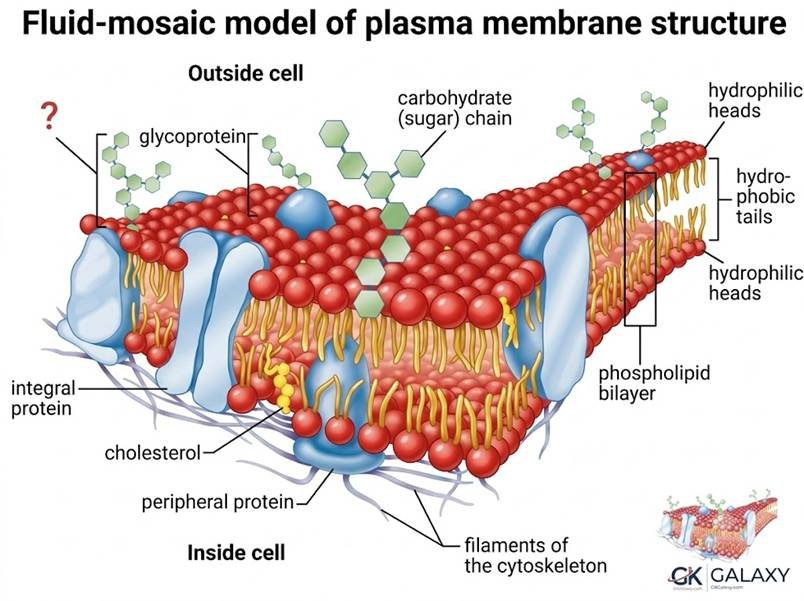
The plasma membrane, also called the cell membrane, forms the outer boundary of the cell and regulates the movement of substances into and out of it.
STRUCTURE
It is mainly composed of lipids and proteins.
Phospholipids form a bilayer.
Hydrophilic heads face the aqueous environment.
Hydrophobic tails face inward, away from water.
Proteins may be integral or peripheral.
Cholesterol helps regulate membrane fluidity in animal cells.
Carbohydrates associated with lipids and proteins participate in cell recognition.
The accepted model is the fluid mosaic model, proposed by S. J. Singer and G. L. Nicolson in 1972.
FUNCTIONS
- Controls the entry and exit of substances.
- Maintains cellular integrity.
- Facilitates cell signalling and recognition.
- Supports passive and active transport.
- Participates in endocytosis and exocytosis.
NEET HIGH-YIELD FACTS
Simple diffusion occurs down a concentration gradient without direct energy expenditure.
Facilitated diffusion uses membrane proteins but does not directly require ATP.
Active transport can move substances against their concentration or electrochemical gradient and requires energy.
Osmosis is the movement of water across a selectively permeable membrane in response to a difference in water potential.
3. CELL WALL
The cell wall is a rigid outer covering present in plant cells, fungi and most bacteria, but absent in animal cells.
| Organism | Major cell-wall component |
| Plants | Cellulose |
| Fungi | Chitin |
| Most bacteria | Peptidoglycan |
| Archaea | No true bacterial peptidoglycan; composition varies |
Functions
Provides shape and mechanical support.
Protects the cell against physical damage.
Helps prevent excessive swelling under suitable conditions.
Allows communication between adjacent plant cells through plasmodesmata.
In plants, the middle lamella is rich in calcium pectate and helps cement neighbouring cells together.
4. NUCLEUS
The nucleus contains most of the genetic material in a eukaryotic cell and regulates gene expression and cellular activities.
STRUCTURE
NUCLEAR ENVELOPE: A double membrane surrounding the nucleus. The two membranes enclose a perinuclear space.
NUCLEAR PORES: Permit regulated exchange of RNA, proteins and other molecules between the nucleus and cytoplasm.
NUCLEOPLASM: The internal fluid-like matrix of the nucleus.
CHROMATIN: DNA associated with proteins, particularly histones. It condenses into visible chromosomes during cell division.
NUCLEOLUS: A dense region involved in ribosomal RNA synthesis and ribosomal subunit assembly.
Functions
Stores and protects genetic information.
Controls gene expression.
Supports DNA replication before cell division.
Produces RNA through transcription.
Participates in ribosome biogenesis through the nucleolus.
Important exception: Mature mammalian red blood cells lack a nucleus. Prokaryotes do not possess a membrane-bound nucleus; their genetic material is located in the nucleoid region.
5. Mitochondria
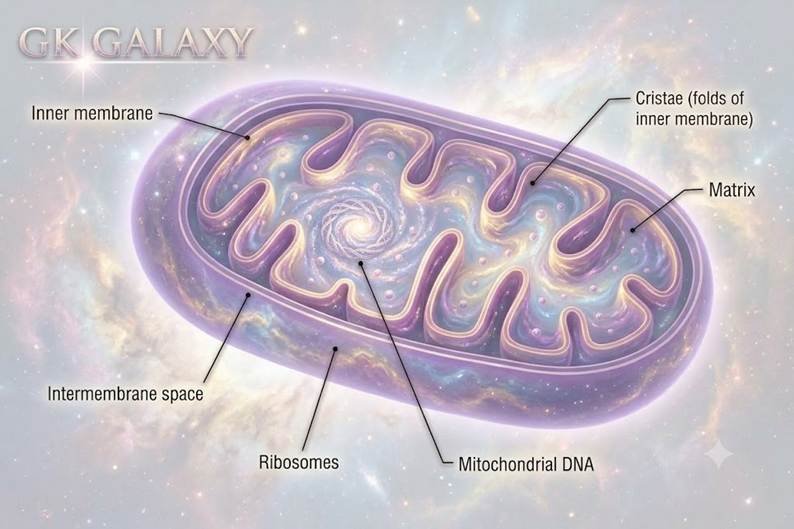
Mitochondria are double-membrane-bound organelles primarily involved in aerobic cellular respiration and ATP production.
They are often called the powerhouses of the cell.
STRUCTURE
Outer membrane: Forms the external boundary.
Intermembrane space: Space between the two membranes.
Inner membrane: Contains components of the electron transport chain and ATP synthase.
Cristae: Folds of the inner membrane that increase its surface area.
Matrix: Contains enzymes, mitochondrial DNA, RNA and ribosomes.
FUNCTIONS
- Produces ATP through oxidative phosphorylation.
- Participates in the citric acid cycle, also called the Krebs cycle.
- Supports oxidation of pyruvate-derived acetyl-CoA.
- Participates in the regulation of programmed cell death.
- Helps regulate cellular calcium and metabolic processes.
Why are mitochondria called semiautonomous organelles?
Mitochondria possess their own DNA and ribosomes and can produce some of their own proteins. However, most mitochondrial proteins are encoded by nuclear genes and imported into the organelle.
NEET FACTS
The electron transport chain and ATP synthase are located in the inner mitochondrial membrane.
The Krebs cycle occurs in the mitochondrial matrix in eukaryotic cells.
Mitochondrial DNA is generally circular.
Mitochondria are associated with the endosymbiotic origin of eukaryotic cells.
6. PLASTIDS
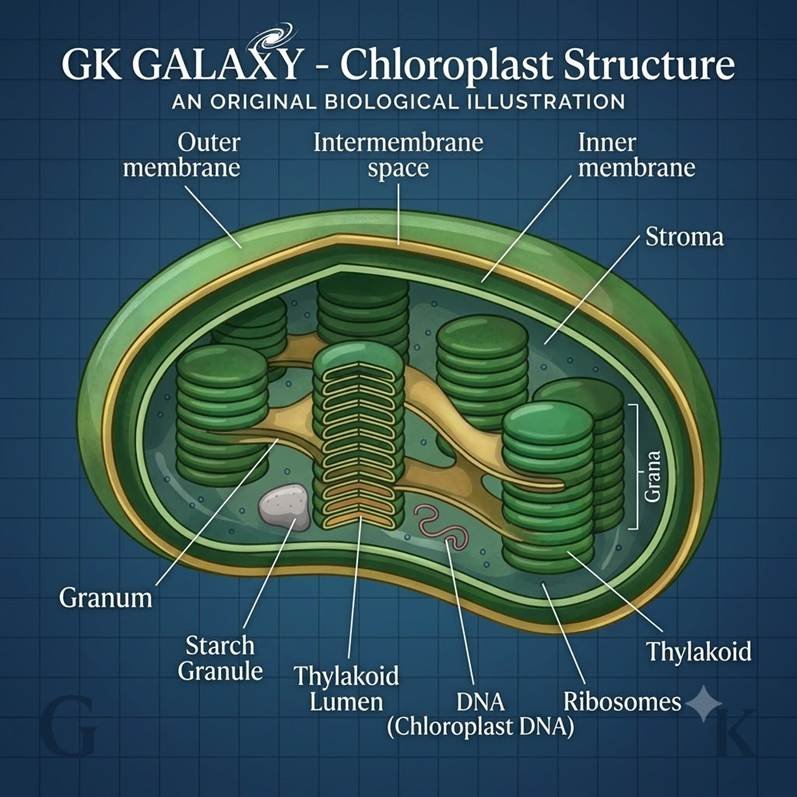
Plastids are found in plants and many algae. They are double-membrane-bound organelles that include chloroplasts, chromoplasts and leucoplasts.
A. CHLOROPLASTS
Chloroplasts are the principal sites of photosynthesis in plants.
STRUCTURE
Outer and inner membranes
Stroma
Thylakoids
Grana, which are stacks of thylakoids
Stroma lamellae connecting grana
Chlorophyll and other photosynthetic pigments in thylakoid membranes
Chloroplast DNA and ribosomes
FUNCTIONS
Light-dependent reactions occur in the thylakoid membranes.
The Calvin cycle occurs in the stroma.
Produces carbohydrates through photosynthesis using energy derived from light.
B. CHROMOPLASTS
Chromoplasts contain carotenoid pigments and contribute yellow, orange and red colours to many flowers and fruits. These colours can assist in attracting pollinators and seed dispersers.
C. LEUCOPLASTS
Leucoplasts are generally colourless plastids involved mainly in storage.
| Type | Main stored substance |
| Amyloplast | Starch |
| Elaioplast | Oils and fats |
| Proteinoplast (aleuroplast) | Proteins |
Plastids can change their developmental state in some plant tissues. Like mitochondria, they contain their own genetic material and ribosomes.
7. ENDOPLASMIC RETICULUM (ER)
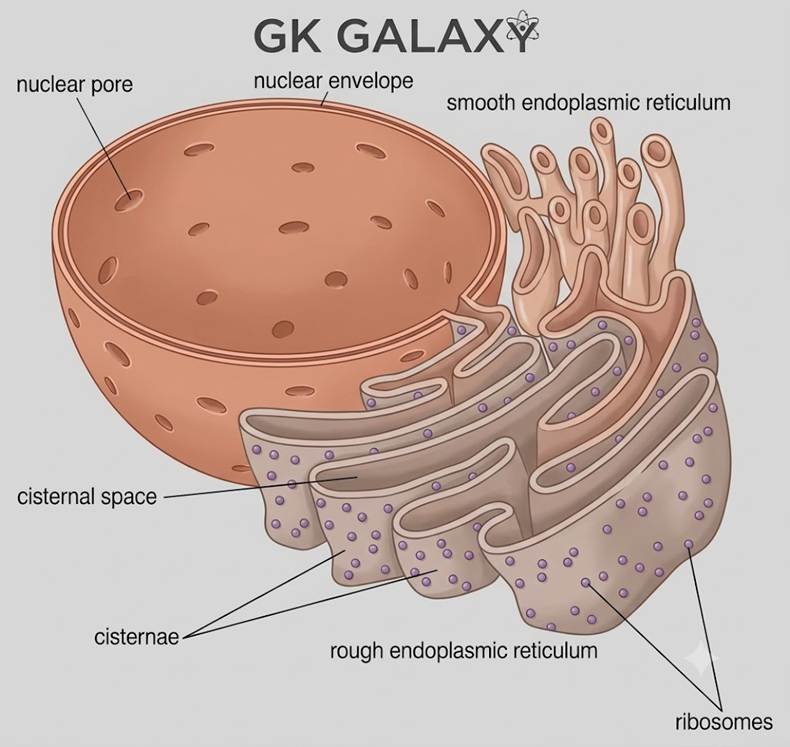
The endoplasmic reticulum is a network of membrane-bound tubules, vesicles and flattened sacs called cisternae. It is involved in the synthesis, processing and transport of cellular materials.
A. Rough Endoplasmic Reticulum (RER)
RER has ribosomes attached to its cytoplasmic surface, giving it a rough appearance.
Functions:
Synthesis of many secretory proteins.
Synthesis of membrane proteins.
Initial folding and processing of newly synthesized proteins.
Transport of proteins towards the Golgi apparatus.
B. Smooth Endoplasmic Reticulum (SER)
SER lacks attached ribosomes.
Functions:
Synthesis of lipids and phospholipids.
Synthesis of steroid hormones in steroid-producing cells.
Detoxification of drugs and harmful substances, particularly in liver cells.
Calcium storage and release in specialized muscle-cell SER, called the sarcoplasmic reticulum.
NEET distinction: RER is primarily associated with protein synthesis, whereas SER is associated with lipid synthesis and several metabolic functions.
8. Golgi Apparatus
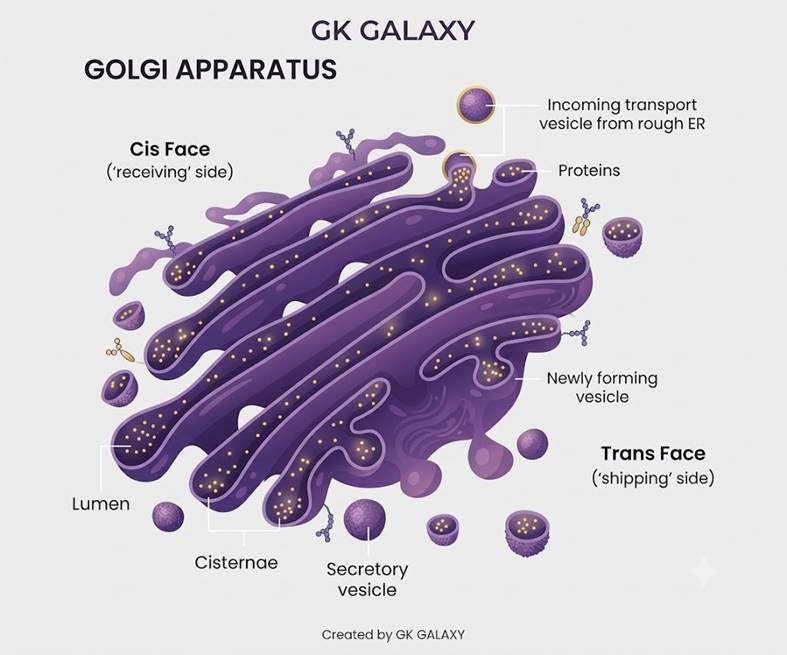
The Golgi apparatus consists of stacks of flattened membrane-bound sacs called cisternae. It was discovered and described by Camillo Golgi in 1898.
Structure
Cis face: Generally receives transport vesicles from the endoplasmic reticulum.
Medial region: Participates in the modification and processing of molecules.
Trans face: Generally sorts and dispatches materials to their destinations.
Functions
- Modifies proteins and lipids received from the ER.
- Participates in the formation of glycoproteins and glycolipids.
- Sorts and packages materials into vesicles.
- Produces secretory vesicles.
- Contributes to lysosome formation by processing and sorting lysosomal enzymes.
- Helps synthesize certain complex carbohydrates.
Important fact: The Golgi apparatus is a central processing and distribution centre of the endomembrane system.
9. Lysosomes
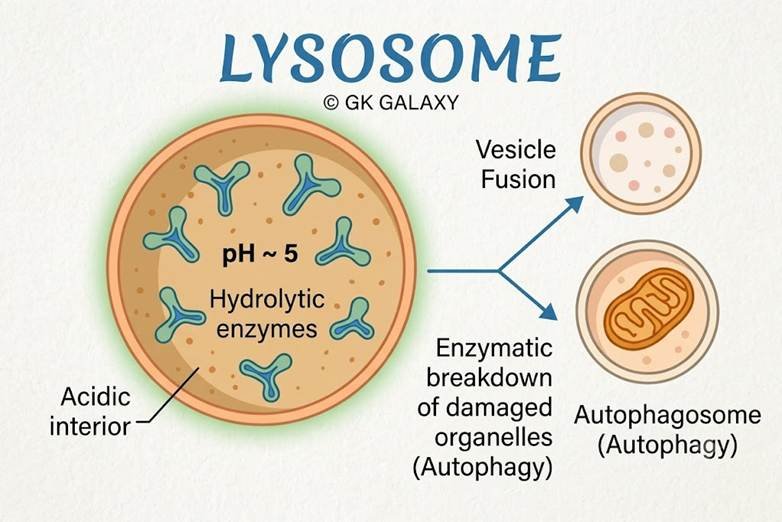
Lysosomes are single-membrane-bound organelles containing hydrolytic enzymes that digest biological materials.
They are formed through the coordinated activities of the endoplasmic reticulum and Golgi apparatus.
Functions
Intracellular digestion of macromolecules.
Breakdown of materials taken up by endocytosis.
Recycling of damaged cellular components through autophagy.
Destruction of certain invading microorganisms.
Removal and recycling of cellular waste.
Lysosomal enzymes work best in an acidic environment, typically around pH 4.5–5, maintained partly by proton pumps in the lysosomal membrane.
Why are lysosomes called suicidal bags?
This traditional term refers to the possibility that the release of lysosomal enzymes into the cytoplasm under certain circumstances can contribute to cellular damage. It does not mean that lysosomes normally destroy healthy cells.
10. Vacuoles
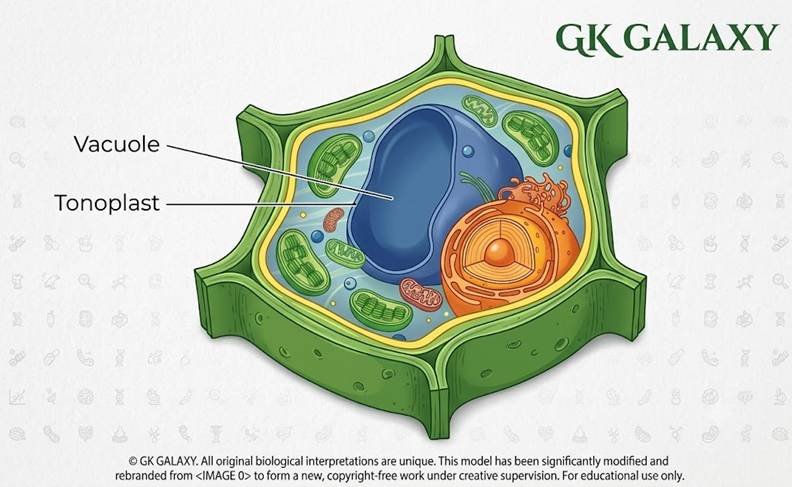
Vacuoles are membrane-bound compartments involved in storage, regulation and waste management. In plant cells, a large central vacuole may occupy much of the cell’s volume.
Important components
Cell sap: Fluid containing water, ions, sugars, pigments and other dissolved substances.
Tonoplast: The membrane surrounding a vacuole.
Functions
- Stores water, ions, nutrients and waste products.
- Maintains turgor pressure in plant cells.
- Helps regulate cellular osmotic balance.
- Stores pigments, including anthocyanins in some plant cells.
- Supports digestion in certain protists.
Contractile vacuoles help remove excess water from many freshwater protists.
11. Ribosomes
Ribosomes are non-membranous structures responsible for protein synthesis. They consist of ribosomal RNA (rRNA) and proteins.
Types
| Ribosome type | Typical location |
| 70S | Prokaryotic cytoplasm; mitochondria and plastids |
| 80S | Eukaryotic cytoplasm and the surface of rough ER |
The 70S ribosome contains a 50S large subunit and a 30S small subunit. The 80S ribosome contains a 60S large subunit and a 40S small subunit.
The Svedberg (S) unit represents sedimentation behaviour; it is not an additive measure of mass, which explains why the subunits’ S values do not simply add to the value of the complete ribosome.
Polysomes
When multiple ribosomes translate a single mRNA molecule simultaneously, they form a polysome or polyribosome.
NEET facts
Ribosomes are not surrounded by a membrane.
Free ribosomes commonly synthesize proteins used in the cytosol and certain organelles.
Ribosomes attached to RER synthesize many proteins destined for secretion, membranes or the endomembrane system.
12. Peroxisomes and Glyoxysomes
Peroxisomes are single-membrane-bound microbodies containing enzymes involved in oxidation reactions.
Functions of peroxisomes
Break down certain fatty acids.
Produce hydrogen peroxide during some oxidation reactions.
Use catalase to convert hydrogen peroxide into water and oxygen.
Participate in photorespiration in plant cells.
Glyoxysomes
Glyoxysomes are specialized microbodies found particularly in oil-rich seeds during germination.
They contain enzymes of the glyoxylate cycle, which helps convert stored lipids into carbohydrate precursors needed by the developing seedling.
Distinction: Peroxisomes and glyoxysomes are not considered part of the endomembrane system in the standard NCERT classification.
13. Cytoskeleton
The cytoskeleton is a network of protein filaments that provides structural organization and supports movement inside cells.
It consists of three major components.
| Component | Main protein | Major functions |
| Microtubules | Tubulin | Intracellular transport, spindle formation, cilia and flagella |
| Microfilaments | Actin | Cell movement, contraction and cytokinesis |
| Intermediate filaments | Various proteins | Mechanical strength and structural stability |
Functions
Maintains cell shape.
Supports intracellular transport.
Helps position organelles.
Participates in cell division.
Enables movement and changes in cell shape.
14. Centrosome and Centrioles
The centrosome is an important microtubule-organizing centre in animal cells. It typically contains a pair of centrioles surrounded by pericentriolar material.
Each centriole has a characteristic arrangement of nine peripheral microtubule triplets, often described as a cartwheel-like organization in cross-section.
Functions
Organizes microtubules.
Helps organize the mitotic spindle in animal cells.
Centrioles can form basal bodies from which cilia and flagella develop.
A centriole is not the same structure as a basal body, although they share a similar microtubule arrangement.
15. Cilia and Flagella
Cilia and flagella are cell-surface projections involved in movement or moving fluid across a cell surface.
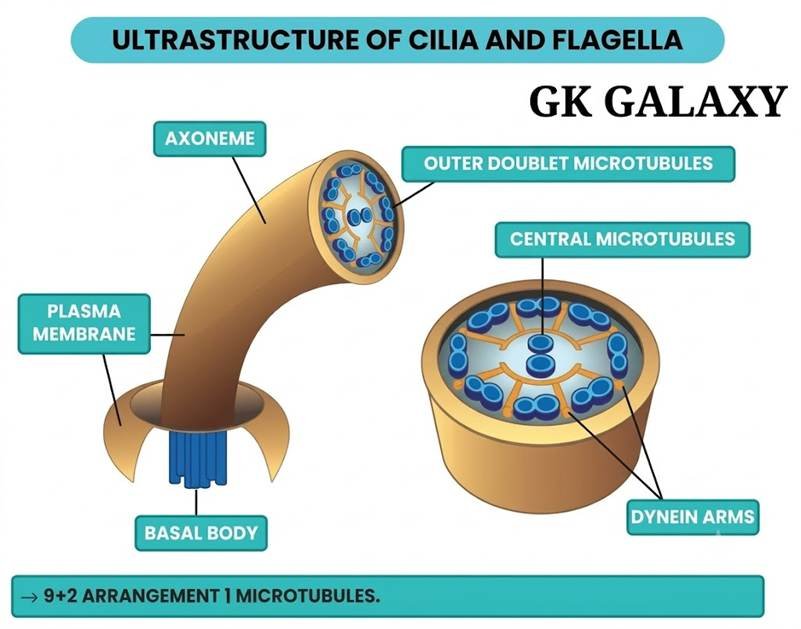
Structure
Many motile eukaryotic cilia and flagella possess an axoneme with a 9 + 2 arrangement:
Nine peripheral microtubule doublets.
Two central microtubules.
The axoneme is surrounded by the plasma membrane. Dynein motor proteins help produce bending movements.
Basal bodies generally possess nine peripheral microtubule triplets and lack the central pair characteristic of the typical motile axoneme.
Examples:
Cilia move mucus in the human respiratory tract.
Flagella help sperm cells move.
Not all cilia are motile; primary cilia often perform sensory functions.
16. Other Important Cell Structures
A. Nucleolus
The nucleolus is a region inside the nucleus where ribosomal RNA is synthesized and ribosomal subunits are assembled. It is not surrounded by a membrane.
B. Chromatin and Chromosomes
Chromatin consists of DNA and associated proteins. During cell division, chromatin becomes more condensed and forms visible chromosomes.
Histones help package DNA into chromatin.
C. Plasmodesmata
Plasmodesmata are cytoplasmic channels connecting neighbouring plant cells through their cell walls. They enable communication and transport of certain substances between cells.
D. Mesosomes — an important historical caution
Older biology texts described mesosomes as infoldings of the bacterial plasma membrane and attributed several functions to them. However, mesosomes are now generally considered artifacts of chemical fixation in electron microscopy, not accepted normal structures of living bacterial cells. Be careful when interpreting older examination questions that repeat the historical description.
17. Endomembrane System
The endomembrane system consists of organelles that work together in the synthesis, modification, packaging, transport and digestion of cellular materials.
The standard NCERT grouping includes:
Endoplasmic reticulum
Golgi apparatus
Lysosomes
Vacuoles
Not included in this grouping: Mitochondria, chloroplasts, peroxisomes and ribosomes.
This is a particularly important NEET distinction because an organelle can be membrane-bound without belonging to the endomembrane system.
18. Rapid Revision Table
| Organelle or structure | Most important function or identifying feature |
| Nucleus | Genetic control and DNA storage |
| Nucleolus | rRNA synthesis and ribosomal subunit assembly |
| Mitochondria | Aerobic respiration and ATP production |
| Chloroplast | Photosynthesis |
| RER | Synthesis of many secretory and membrane proteins |
| SER | Lipid synthesis and detoxification |
| Golgi apparatus | Modification, sorting and packaging |
| Lysosomes | Intracellular digestion |
| Vacuoles | Storage and osmotic regulation |
| Ribosomes | Protein synthesis |
| Peroxisomes | Oxidation and hydrogen peroxide metabolism |
| Glyoxysomes | Glyoxylate cycle in germinating oil-rich seeds |
| Cytoskeleton | Cell shape, organization and movement |
| Centrioles | Microtubule organization and basal-body formation |
| Cilia and flagella | Movement or sensory functions |
| Plasmodesmata | Communication between plant cells |