GUMROAD eBook link:-
BY SHAILENDRA KUMAR VERMA
| Affiliate link of GUMROAD eBook | |
| https://skverma29.gumroad.com/affiliates | |
| 1. | CHALLENGING SYLLOGISM |
| https://skverma29.gumroad.com/l/ktxvzi | |
| 2. | STRAIT OF HORMUZ: STRATEGIC & ECONOMIC ROLE |
| https://skverma29.gumroad.com/l/upobrv | |
| 4. | STATIC GENERAL KNOWLEDGE |
| https://skverma29.gumroad.com/l/kzmca | |
| 5. | SSC ENGLISH PREVIOUS YEAR QUESTIONS MCQ |
| https://skverma29.gumroad.com/l/vtotyp | |
| 6. | SSC REASONING PREVIOUS YEAR QUESTIONS MCQ |
| https://skverma29.gumroad.com/l/fsyvp | |
| 7. | SSC MATH PREVIOUS YEAR QUESTIONS (MCQ): TIER I |
| https://skverma29.gumroad.com/l/nesioq | |
| 8. | BANKING KNOWLEDGE QUESTIONS AND ANSWERS MCQ |
| https://skverma29.gumroad.com/l/sgbbul | |
| 9. | BIHAR ANM, GNM & PHARMACIST EXAM: PAST MCQ QUESTIONS & ANSWERS – |
| https://skverma29.gumroad.com/l/yotjat | |
| 10. | ARAVALLI MOUNTAIN RANGE: THE ANCIENT SPINE OF INDIA |
| https://skverma29.gumroad.com/l/khpakf | |
| 11. | मौर्य काल (322 ईसा पूर्व – 185 ईसा पूर्व): पीएसयू परीक्षा हेतु प्रश्नोत्तर सहित विस्तृत अध्ययन |
| https://skverma29.gumroad.com/l/kgmrw | |
| 12. | VOLCANOES AND EARTHQUAKES: A COMPLETE GUIDE |
| https://share.google/gMZLAnx4hcCV82NTI | |
| 13. | TERMINOLOGY: RAILWAY, COMPUTER, SHARE MARKET, BIOLOGY, BADMINTON, CRICKET, FOOTBALL, KABBADI AND HOCKEY |
| https://share.google/fvdFN53HtyXlqTCgd | |
| 14. | भारतीय संसद का सत्र: प्रक्रिया, नियमऔर एस ओ पी; पी एस यू परीक्षा के लिए संपूर्ण मार्ग दर्शिका |
| https://share.google/1HFwXZA3qUiKyrI1l | |
| 15. | REITs AND InvITs IN INDIA: COMPLETE GUIDE (SCOPE, RISKS & FUTURE) |
| https://share.google/EChDc9heQmPPeyhoi | |
| 16. | GK SSC TIER I PREVIOUS YEAR MCQ |
| https://share.google/5pLzqYKQtg822wk3Y | |
| 17. | PETROLEUM REFINERY PROCESS: WITH 200 MCQ |
| https://skverma29.gumroad.com/l/jgydi | |
| 18. | SET THEORY: A COMPLETE GUIDE WITH 400 MCQ |
| https://skverma29.gumroad.com/l/zkhqzm | |
| 19. | WORLD’S SMALLEST, LONGEST, THINNEST, THICKEST AND TALLEST |
| https://skverma29.gumroad.com/l/kzaenh | |
| 20. | HIGH TIDE AND LOW TIDE: A COMPLETE GUIDE https://skverma29.gumroad.com/l/virke |
| 21. | 1000 HISTORY QESTIONS & ANSWERS FOR PSU |
| https://skverma29.gumroad.com/l/fjapus | |
| 22. | नालंदा विश्वविद्यालय : सम्पूर्ण अध्ययन |
| https://skverma29.gumroad.com/l/pmjab?wanted=true | |
| 23. | भगवान शिव के 12 ज्योतिर्लिंग: इतिहास, महत्व और दर्शन क्रम |
| https://skverma29.gumroad.com/l/wdkgo | |
| 24 | NISM-SERIES-V-A MUTUAL FUND DISTRIBUTOR: COMPLETE STUDY GUIDE & EXAM PREPARATION |
| https://skverma29.gumroad.com/l/qgcviu | |
| 25. | WORKSHOP TECHNOLOGY & MANUFACTURING PROCESSES COMPLETE EXAM GUIDE |
| https://skverma29.gumroad.com/l/xvqxnp | |
| 26. | उगना महादेव और महाकवि विद्यापति |
| https://skverma29.gumroad.com/l/xjehig | |
| 27. | FINANCIAL INCLUSION (FI), MICROFINANCE AND SOCIAL SECURITY IN INDIA:A COMPLETE GUIDE |
| https://skverma29.gumroad.com/l/lpendf | |
| 28. | Vermaji’s Cute Animals Coloring Book |
| https://skverma29.gumroad.com/l/chrxrc | |
AMAZON eBook link:-
BY SHAILENDRA KUMAR VERMA
| 1. | SSC MATH PREVIOUS YEAR MCQ: SSC MATH |
| https://amzn.in/d/097Ocsnl | |
| 2. | SSC REASONING PREVIOUS YEAR MCQ: SSC REASONING |
| https://amzn.in/d/00EHQGE8 | |
| 3. | SSC ENGLISH PREVIOUS YEAR MCQ: SSC ENGLISH |
| https://amzn.in/d/0f8sxJoy | |
| 4. | STATIC GENERAL KNOWLEDGE : WITH 620 MCQs |
| https://amzn.in/d/09xNEWmt |
PLAYSTORE eBook link:-
BY SHAILENDRA KUMAR VERMA
| 1. | SSC MATH PREVIOUS YEAR MCQ |
| https://share.google/KzWbvkFuNk51PEpiu | |
| 2. | SSC REASONING PREVIOUS YEAR MCQ |
| https://play.google.com/books/publish/a/12574378860292240754#book/GGKEY:EUPQZ9ZUAFR/review | |
| 3. | STATIC GENERAL KNOWLEDGE |
| https://play.google.com/books/publish/a/12574378860292240754#book/GGKEY:CQDT2G4CCQP/review | |
| 4. | CHALLENGING SYLLOGISM |
| https://share.google/w9xLMwyiJdNVnpHxI | |
| 5. | STRAIT OF HORMUZ: STRATEGIC & ECONOMIC ROLE |
| https://share.google/V10H7UKeTkstLIMmc | |
| 6. | BIHAR TEACHER ELIGIBILITY TEST (BIHAR TET) : COMPLETE GUIDE |
| https://share.google/AcCXPFa69dAWyYaZZ | |
| 7. | SSC ENGLISH PREVIOUS YEAR MCQ |
| https://share.google/pr7b0YhDoDwttaq2s | |
| 8. | BANKING KNOWLEDGE QUESTIONS AND ANSWERS MCQ |
| https://share.google/yqYOabKhNppcz89hl | |
| 9. | BIHAR ANM, GNM & PHARMACIST EXAM: PAST MCQ QUESTIONS & ANSWERS – |
| https://share.google/NFhtU1JoBfxPS4wa3 | |
| 10. | ARAVALLI MOUNTAIN RANGE: THE ANCIENT SPINE OF INDIA |
| https://share.google/Yo4RYnaZrbRu9qwzj | |
| 11. | GK SSC TIER I PREVIOUS YEAR MCQ |
| https://share.google/sBdCcsEeebM44QZ0X | |
| 12. | REITs AND InvITs IN INDIA: COMPLETE GUIDE (SCOPE, RISKS & FUTURE) |
| https://share.google/XAwUio1deUOxFe2M7 | |
| 13. | भारतीय संसद का सत्र: प्रक्रिया, नियमऔर एस ओ पी ; पी एस यू परीक्षा के लिए संपूर्ण मार्ग दर्शिका |
| https://share.google/6XVrfQ2PcuWmqvKol | |
| 14. | मौर्य काल (322 ईसा पूर्व – 185 ईसा पूर्व): पीएसयू परीक्षा हेतु प्रश्नोत्तर सहित विस्तृत अध्ययन |
| https://share.google/Lwu7JKHE54kxsL5e2 | |
| 15. | TERMINOLOGY: RAILWAY, COMPUTER, SHARE MARKET, BIOLOGY, BADMINTON, CRICKET, FOOTBALL, KABBADI AND HOCKEY |
| https://share.google/WWVO9ZFd81R9G9h69 | |
| 16. | VOLCANOES AND EARTHQUAKES: A COMPLETE GUIDE |
| https://share.google/aXi2evRVgmzpQguye | |
| 17. | PETROLEUM REFINERY PROCESS: WITH 200 MCQ |
| https://play.google.com/books/publish/u/0/a/12574378860292240754#book/GGKEY:P34SQBHUJ7F/review | |
| 18. | SET THEORY: A COMPLETE GUIDE WITH 400 MCQ |
| https://play.google.com/books/publish/u/0/a/12574378860292240754#book/GGKEY:83LKH7QHRQH/review | |
| 19. | WORLD’S SMALLEST, LONGEST, THINNEST, THICKEST AND TALLEST |
| https://play.google.com/books/publish/u/0/a/12574378860292240754#book/GGKEY:9LE49HEDZJE/review | |
| 20. | HIGH TIDE AND LOW TIDE: A COMPLETE GUIDE |
| https://play.google.com/books/publish/u/0/a/12574378860292240754#book/GGKEY:TKR79QBDE7R/review | |
| 21. | 1000 HISTORY QESTIONS & ANSWERS FOR PSU |
| https://play.google.com/books/publish/u/0/a/12574378860292240754#book/GGKEY:1SGWQKT7BDF/review | |
| 22. | नालंदा विश्वविद्यालय : सम्पूर्ण अध्ययन |
| https://play.google.com/books/publish/u/0/a/12574378860292240754#book/GGKEY:RY0EDLDK7TL/review | |
| 23. | भगवान शिव के 12 ज्योतिर्लिंग: इतिहास, महत्व और दर्शन क्रम |
| https://play.google.com/books/publish/u/0/a/12574378860292240754#book/GGKEY:KNT0X6L8YCQ/review | |
| 24. | NISM-SERIES-V-A MUTUAL FUND DISTRIBUTOR: COMPLETE STUDY GUIDE & EXAM PREPARATION |
| https://play.google.com/books/publish/u/0/a/12574378860292240754#book/GGKEY:YP1PQ8RQY07/review | |
| 25. | WORKSHOP TECHNOLOGY & MANUFACTURING PROCESSES COMPLETE EXAM GUIDE |
| https://play.google.com/books/publish/u/0/a/12574378860292240754#book/GGKEY:PK621P1ZHXX/review | |
| 26. | उगना महादेव और महाकवि विद्यापति |
| https://play.google.com/books/publish/u/0/a/12574378860292240754#book/GGKEY:QXG2TUGW955/review | |
| 27. | FINANCIAL INCLUSION (FI), MICROFINANCE AND SOCIAL SECURITY IN INDIA:A COMPLETE GUIDE |
| 28. | Vermaji’s Cute Animals Coloring Book |
| https://play.google.com/books/publish/u/0/a/12574378860292240754#book/GGKEY:WFBA8EL20KT/review |
| OPEN DMAT ACCONT FROM THI LINK IN ANGEL ONE:- |
| Open your Trading & Investment account with Angel One for FREE* |
| You will get: |
| All trades in Rs.20 |
| Quick SIP in Direct MF |
| 1Lac MTF @ 0% interest |
| Download only using my referral link to get Free Demat Account⬇ |
| https://angel-one.onelink.me/Wjgr/2o2au42h |
| _link may expire within 48hrs_ |
| _T&C Apply_ |
| CLICK TO APPLY: |
| Click the application link below: 👉 Apply Here for SBI Credit Card (Referral Code: 243zfQ0yYm3) |
| OPEN DMAT ACCOUNT FROM THIS LINK: |
| HI THERE, I SEE YOU HAVEN’T BOUGHT THE FREEDOM PLAN ON INDIAN BANK YET. DON’T MISS OUT ON UNLIMITED TRADING AT A POCKET-FRIENDLY COST. GO BROKERAGE-FREE AND SAVE BIG WITH THE FREEDOM PLAN. USE MY REFERRAL CODE, SHAI0634 TO DOWNLOAD THE APP NOW. |
| https://play.google.com/store/apps/details?id=com.finwizard.fisdom |
DISCLAIMER
This educational material is prepared for Biology learning and NEET-UG preparation. Questions are intended for practice and revision. The year and examination name should be included only when the question’s appearance in that examination can be established from a reliable source. Some questions may be adapted from previous-year question patterns and should not be treated as verbatim official questions unless verified against the original paper. The author and website are not responsible for discrepancies in unofficial question compilations. Refer to the official NTA/NEET question papers and answer keys for confirmation.
Part 1: Complete Theory
1. INTRODUCTION TO BIOMOLECULES
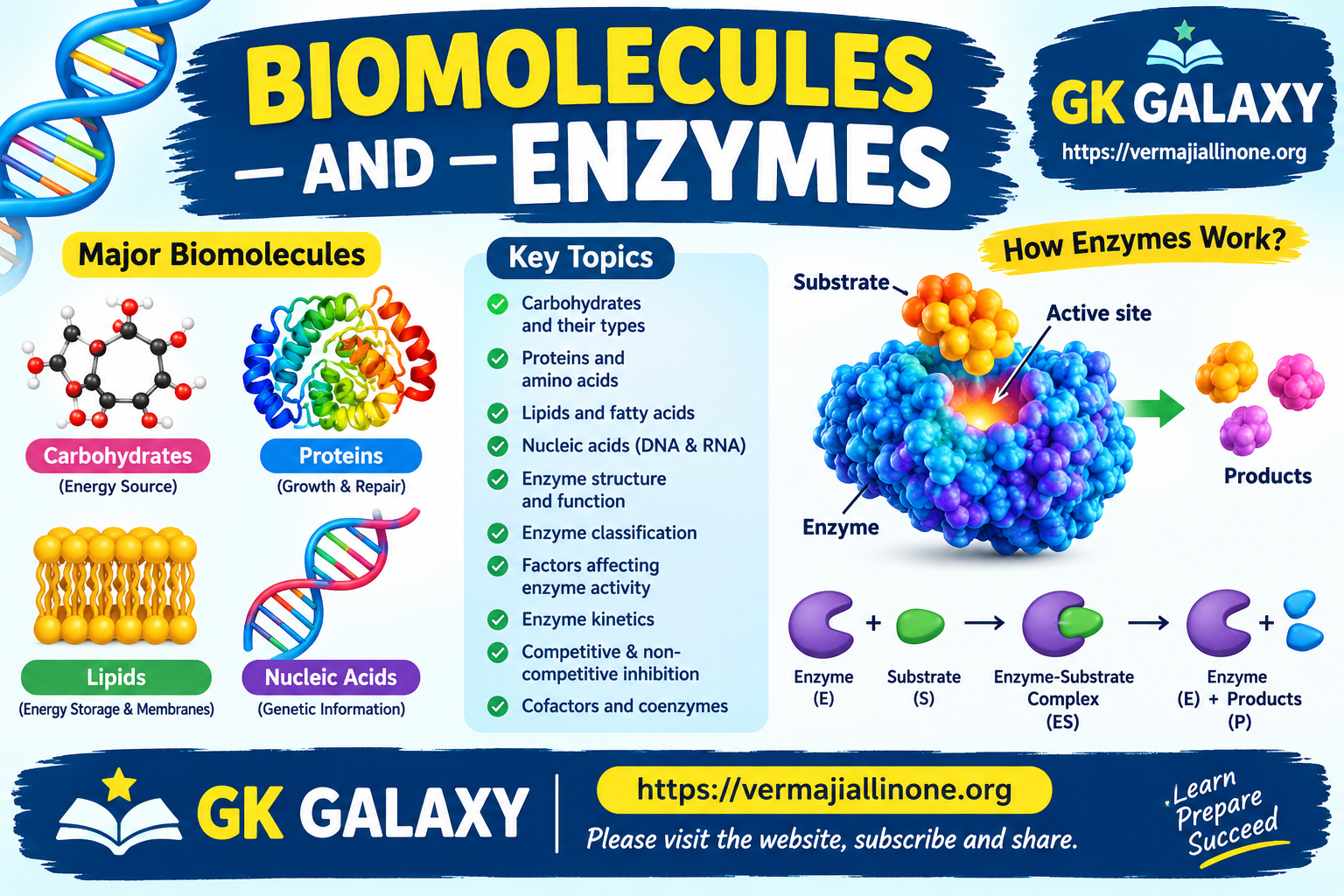
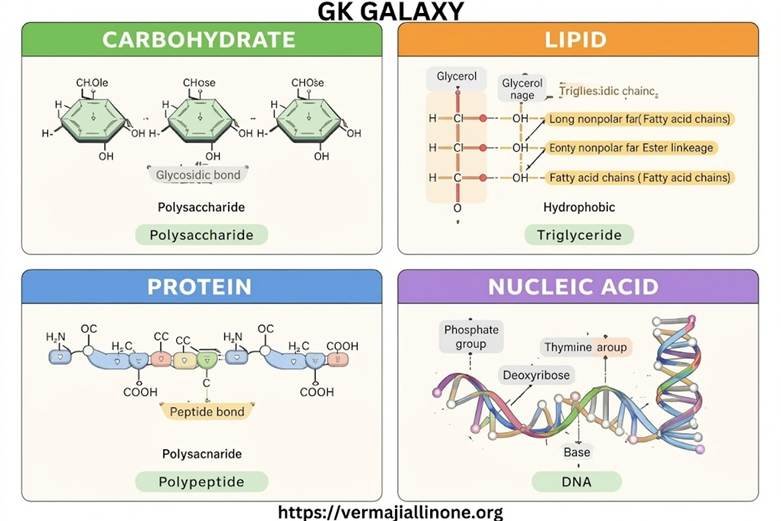
Biomolecules are chemical compounds found in living organisms. They form cellular structures, store and release energy, regulate metabolism and carry genetic information.
The major biomolecules include carbohydrates, proteins, lipids, nucleic acids, and several smaller molecules such as amino acids, nucleotides, vitamins and metabolic intermediates.
1.1 CHEMICAL COMPOSITION OF LIVING ORGANISMS
Living organisms contain both inorganic and organic substances.
Inorganic constituents: Water, mineral salts and dissolved ions.
Organic constituents: Carbohydrates, proteins, lipids, nucleic acids and other carbon-containing compounds.
Water is generally the most abundant chemical component of cells. Organic compounds are essential for cell structure, energy storage, catalysis and heredity.
1.2 ANALYSIS OF CHEMICAL CONSTITUENTS
Biologists study cellular composition by analysing living tissues and their chemical components.
- Elemental analysis: Determines the elements present in biological material, such as carbon, hydrogen, oxygen, nitrogen, phosphorus and sulphur.
- Compound analysis: Identifies individual compounds such as glucose, amino acids, fatty acids and nucleotides.
- Acid-soluble fraction: Generally contains small molecules, including sugars, amino acids, nucleotides and organic acids.
- Acid-insoluble fraction: Generally contains macromolecules and cellular structures, including proteins, nucleic acids, polysaccharides and membrane-associated lipids.
NEET concept: Lipids have relatively low molecular masses compared with many macromolecules, but they are commonly recovered in the acid-insoluble fraction because they occur largely in membranes and other aggregates.
2. CARBOHYDRATES
Carbohydrates are organic compounds composed mainly of carbon, hydrogen and oxygen. They are important energy sources and structural materials.
2.1 Classification of carbohydrates
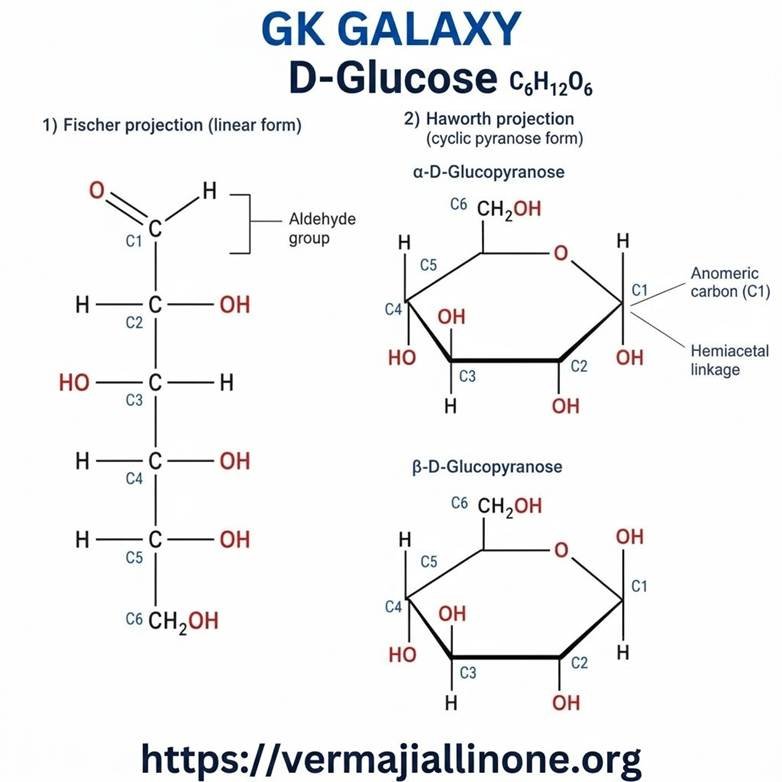
Monosaccharides
The simplest carbohydrates; they cannot be hydrolysed into smaller carbohydrate units.
Examples: glucose, fructose, ribose and deoxyribose.
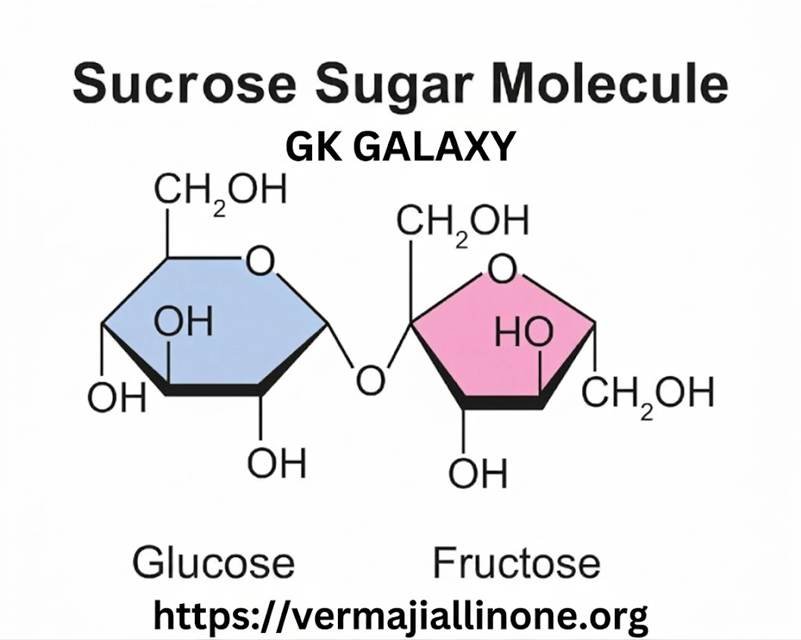
Oligosaccharides
Contain a small number of monosaccharide units. Disaccharides are particularly important.
Examples: sucrose, maltose and lactose.
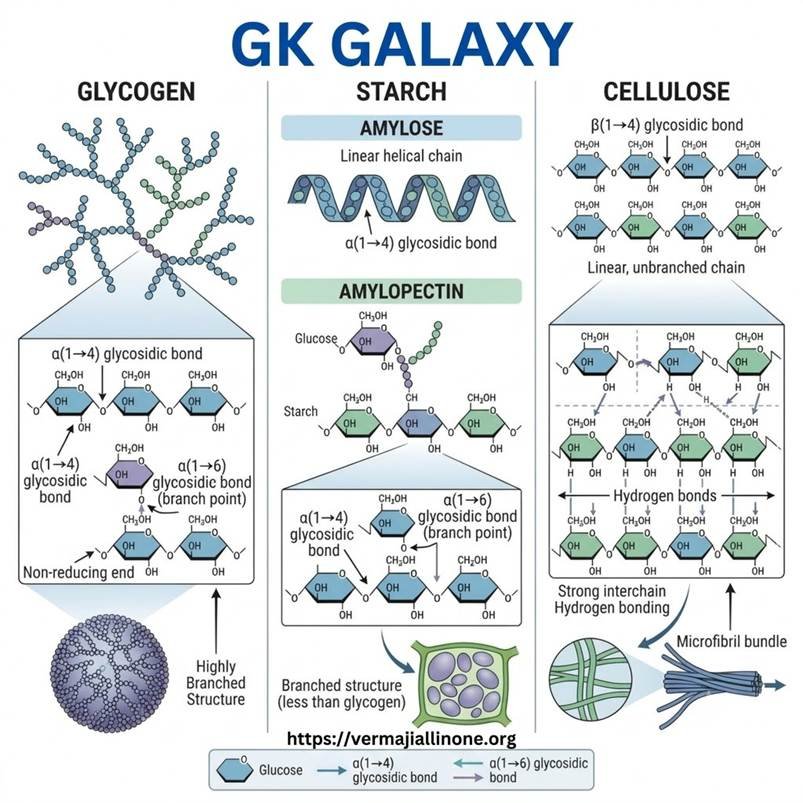
Polysaccharides
Long chains of monosaccharide units that serve storage or structural functions.
Examples: starch, glycogen, cellulose and chitin.
2.2 IMPORTANT MONOSACCHARIDES
| Monosaccharide | Importance |
| Glucose | Major cellular respiratory substrate |
| Fructose | Common fruit sugar |
| Ribose | Component of RNA and ATP |
| Deoxyribose | Component of DNA |
| Galactose | Component of lactose |
Monosaccharides can be classified by the number of carbon atoms. For example, glucose is a hexose, while ribose is a pentose.
2.3 DISACCHARIDES
Disaccharides consist of two monosaccharides joined by a glycosidic bond.
| Disaccharide | Components |
| Sucrose | Glucose + fructose |
| Maltose | Glucose + glucose |
| Lactose | Glucose + galactose |
Sucrose is a non-reducing sugar, whereas maltose and lactose are reducing sugars.
2.4 POLYSACCHARIDES
Starch: The principal storage carbohydrate in plants. It contains amylose and amylopectin.
Glycogen: The principal storage polysaccharide in animals; it is highly branched and is also present in fungi.
Cellulose: A structural polysaccharide of plant cell walls, composed of β-glucose units.
Chitin: A structural polysaccharide found in arthropod exoskeletons and fungal cell walls.
NEET distinction: Humans can digest starch but lack the enzyme cellulase needed to digest cellulose.
3. LIPIDS
Lipids are a diverse group of hydrophobic or amphipathic compounds. They are important for energy storage, membrane formation, insulation and cell signalling.
3.1 TYPES OF LIPIDS
Fats and oils: Composed mainly of glycerol and fatty acids; serve as energy reserves.
Phospholipids: Major components of biological membranes, with hydrophilic heads and hydrophobic tails.
Waxes: Provide protective, water-resistant coatings.
Steroids: Include cholesterol and several steroid hormones.
3.2 FATTY ACIDS
Fatty acids contain a carboxyl group and a hydrocarbon chain.
Saturated fatty acids: Contain no carbon–carbon double bonds in the hydrocarbon chain.
Unsaturated fatty acids: Contain one or more carbon–carbon double bonds.
Triglycerides contain one glycerol molecule linked to three fatty acids by ester bonds. Unlike proteins and nucleic acids, most lipids are not true polymers composed of repeating monomer units.
NEET focus: Phospholipids are amphipathic, whereas triglycerides are primarily energy-storage molecules.
4. PROTEINS
Proteins are biological macromolecules composed of amino acids joined by peptide bonds. They perform structural, catalytic, transport, regulatory, defensive and contractile functions.
4.1 AMINO ACIDS
A typical amino acid contains:
An amino group (–NH₂)
A carboxyl group (–COOH)
A hydrogen atom
A variable side chain (R group)
These groups are attached to the alpha carbon in most protein-forming amino acids.
There are 20 standard amino acids commonly used to build proteins. Their different R groups determine their chemical properties.
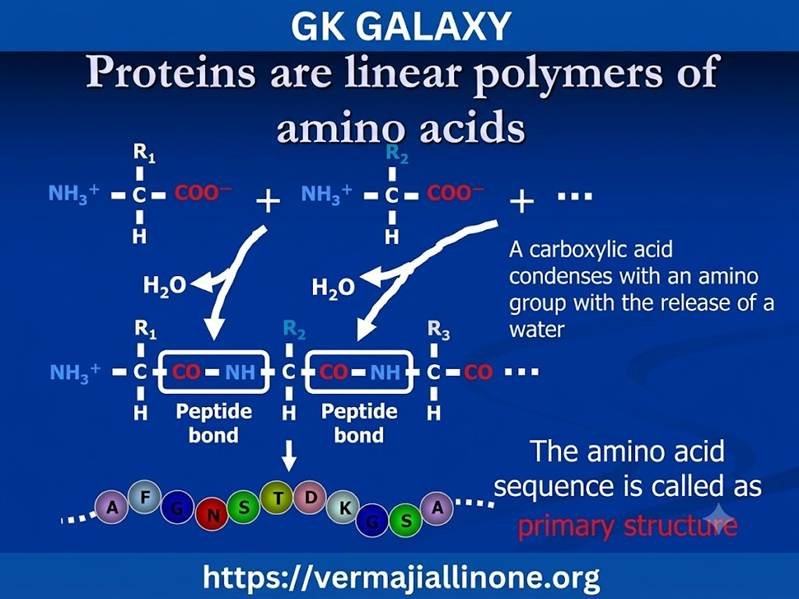
4.2 PEPTIDE BOND
A peptide bond forms between the carboxyl group of one amino acid and the amino group of another, with the elimination of water in the conventional condensation representation.
Two amino acids form a dipeptide; additional amino acids form longer peptides and polypeptides.
4.3 LEVELS OF PROTEIN STRUCTURE
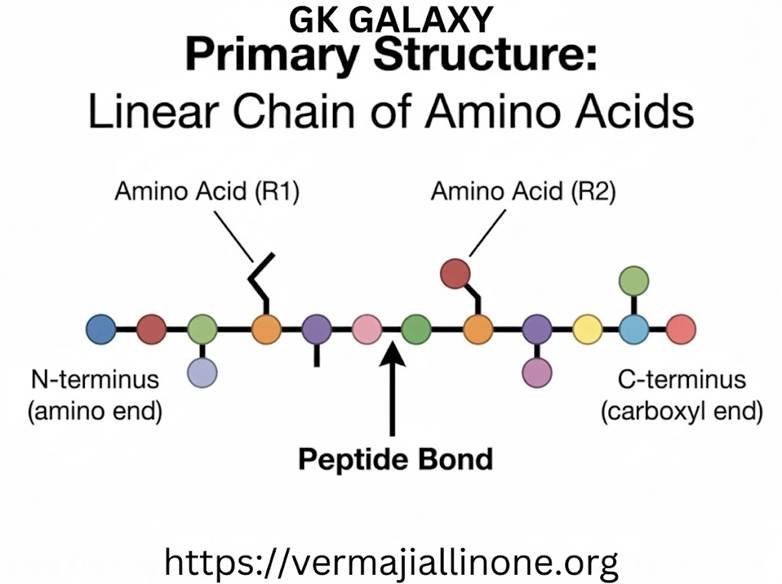
Primary structure
The specific sequence of amino acids in a polypeptide chain.
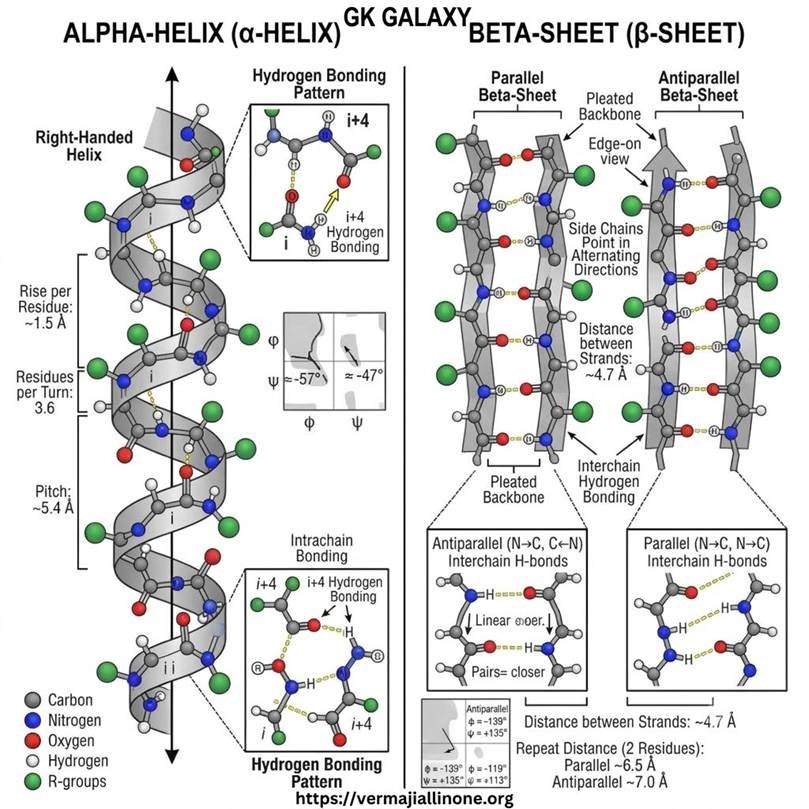
Secondary structure
Local folding, especially the alpha helix and beta-pleated sheet, stabilised mainly by hydrogen bonds between backbone groups.
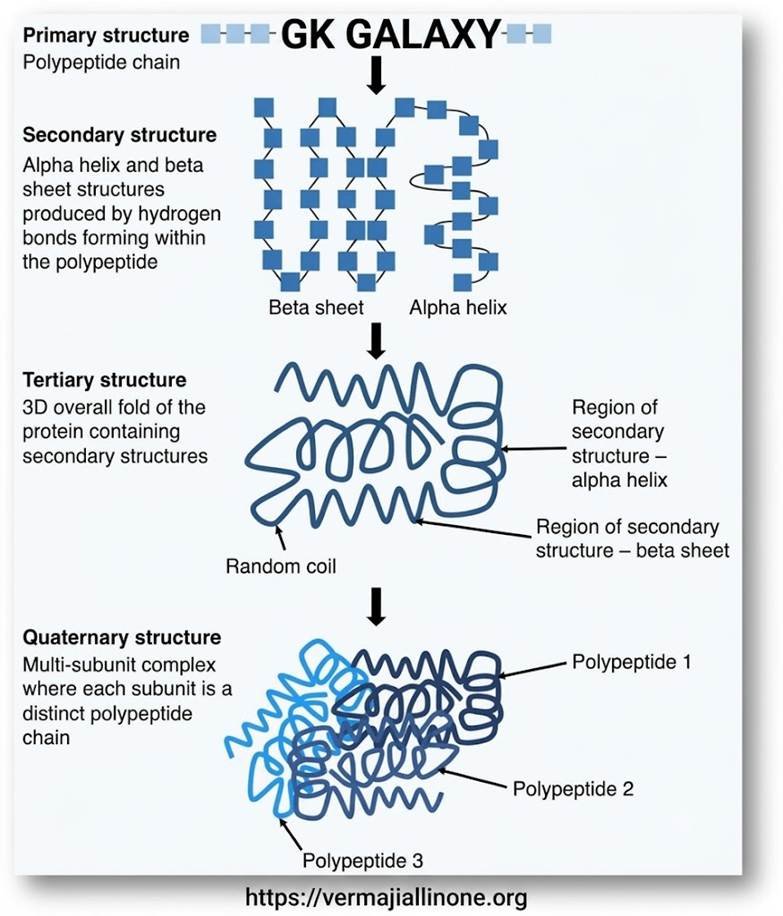
Tertiary structure
The overall three-dimensional folding of a single polypeptide chain.
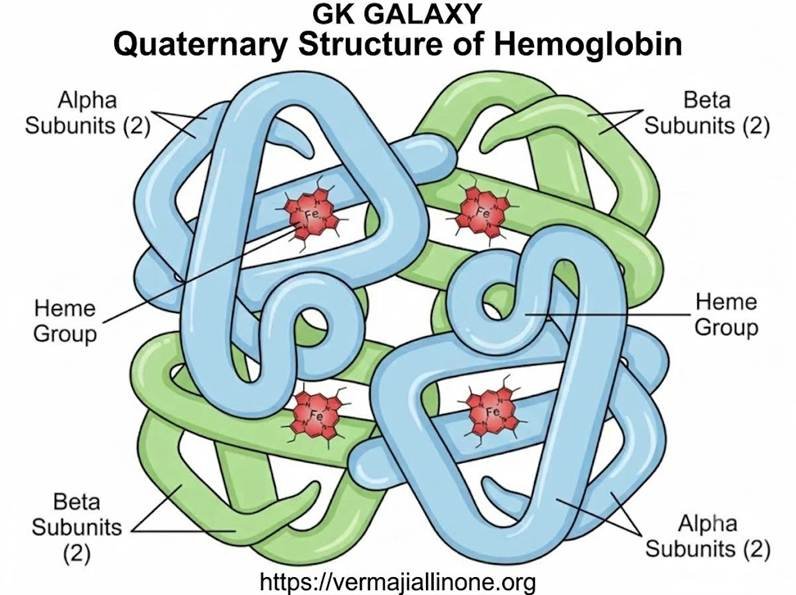
Quaternary structure
The arrangement of multiple polypeptide subunits in a functional protein, as in haemoglobin.
4.4 FIBROUS AND GLOBULAR PROTEINS
| Feature | Fibrous proteins | Globular proteins |
| General shape | Long and fibre-like | Compact and rounded |
| Solubility | Often poorly soluble | Often water-soluble |
| Main role | Structural support | Diverse functional roles |
| Examples | Collagen, keratin | Haemoglobin, many enzymes |
4.5 DENATURATION OF PROTEINS
Denaturation is the disruption of a protein’s native conformation by factors such as heat, extreme pH or certain chemicals.
It commonly affects secondary, tertiary and quaternary structures without breaking all the peptide bonds of the primary structure.
Example: Heating egg white causes its proteins to denature and coagulate.
5. NUCLEIC ACIDS
Nucleic acids store, transmit and help express genetic information. The two principal types are DNA and RNA.
5.1 NUCLEOSIDES AND NUCLEOTIDES
Nitrogenous base + pentose sugar = nucleoside.
Nucleoside + phosphate group(s) = nucleotide.
The nitrogenous bases are classified into two groups:
Purines: Adenine (A) and guanine (G).
Pyrimidines: Cytosine (C), thymine (T) and uracil (U).
5.2 DNA AND RNA
| Feature | DNA | RNA |
| Sugar | Deoxyribose | Ribose |
| Bases | A, G, C, T | A, G, C, U |
| Usual structure | Double-stranded | Often single-stranded |
| Major role | Genetic information storage | Gene expression and other cellular functions |
DNA nucleotides are connected through 3′–5′ phosphodiester bonds. In double-stranded DNA, adenine pairs with thymine and guanine pairs with cytosine.
RNA includes messenger RNA (mRNA), transfer RNA (tRNA) and ribosomal RNA (rRNA), among other functional types.
5.3 ATP
Adenosine triphosphate (ATP) consists of adenine, ribose and three phosphate groups. It is a major energy-transfer molecule in cells.
ATP supports biosynthesis, active transport, muscle contraction and numerous other cellular processes.
6. OTHER IMPORTANT BIOMOLECULES
Vitamins
Vitamins are organic compounds required in small quantities for normal physiological functions.
| Vitamin | General importance |
| A | Vision and epithelial health |
| B₁ | Carbohydrate metabolism |
| B₉ | DNA synthesis and cell division |
| B₁₂ | Red blood cell formation and nervous system function |
| C | Collagen synthesis and antioxidant functions |
| D | Calcium and phosphate homeostasis |
| E | Antioxidant protection |
| K | Blood clotting |
MINERALS AND COFACTORS
Mineral ions such as magnesium, iron, zinc and calcium participate in biological processes. Some enzymes require non-protein components called cofactors.
Cofactor: A non-protein component required for the activity of certain enzymes.
Coenzyme: An organic cofactor, often derived from vitamins.
Prosthetic group: A cofactor that is tightly bound to its associated protein.
Apoenzyme: The protein portion of an enzyme without its required cofactor.
Holoenzyme: The complete, active enzyme system consisting of the apoenzyme and its required cofactor.
7. ENZYMES
Enzymes are biological catalysts that increase the rate of chemical reactions by lowering the activation energy. Most enzymes are proteins, although some RNA molecules, called ribozymes, also catalyse reactions.
Enzymes accelerate reactions without being consumed in the overall process. They do not change the overall free-energy difference between reactants and products or the equilibrium constant.
7.1 PROPERTIES OF ENZYMES
- Enzymes are highly efficient biological catalysts.
- They often show specificity for their substrates and reactions.
- Their activity depends on conditions such as temperature and pH.
- Many require metal ions or organic cofactors.
- They can be regulated by inhibitors, activators and cellular conditions.
- They do not change the final equilibrium position of a reversible reaction.
7.2 ENZYME–SUBSTRATE COMPLEX
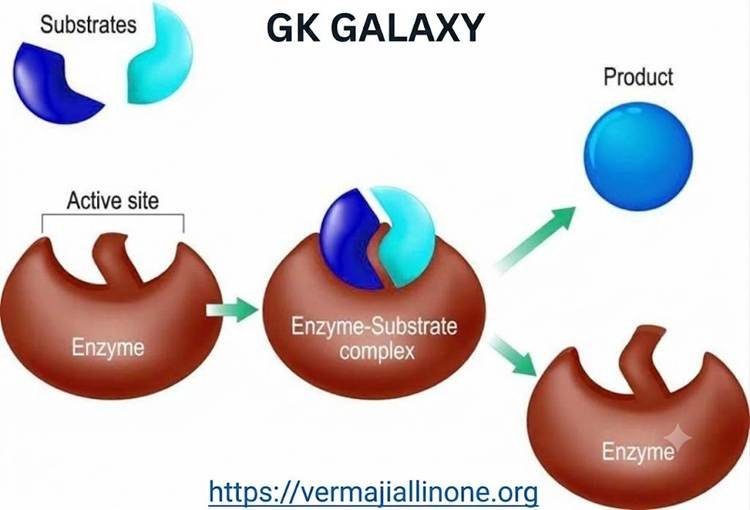
An enzyme binds to its substrate at a specific region called the active site.
The reaction takes place in the following steps:
E + S ⇌ ES → E + P
Where:
E = Enzyme
S = Substrate
ES = Enzyme-substrate complex
P = Product
At the end of the reaction, the product is released, and the enzyme remains unchanged. It can be used again for another reaction.
7.3 LOCK-AND-KEY AND INDUCED-FIT MODELS
Lock-and-key model: The active site is described as complementary to the substrate.
Induced-fit model: Substrate binding promotes a change in enzyme conformation that helps achieve an effective catalytic arrangement.
The induced-fit model better captures the flexibility of many enzyme active sites.
7.4 FACTORS AFFECTING ENZYME ACTIVITY
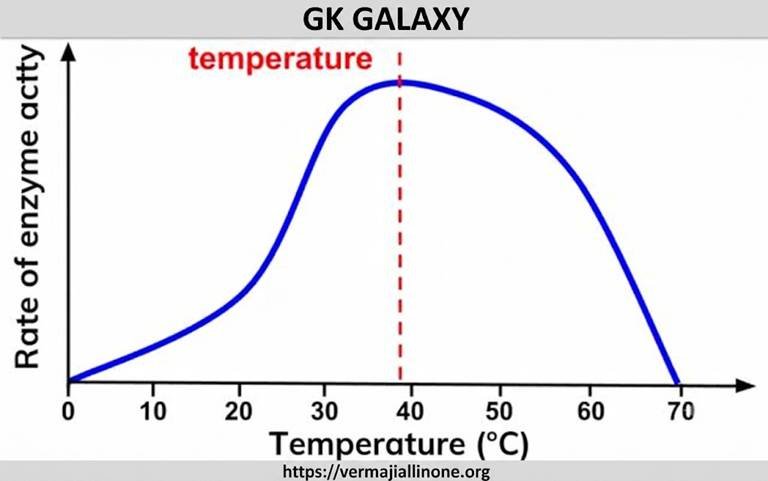
Temperature
Activity generally increases with temperature up to an optimum. Beyond this range, many enzymes lose activity because their structures are disrupted.
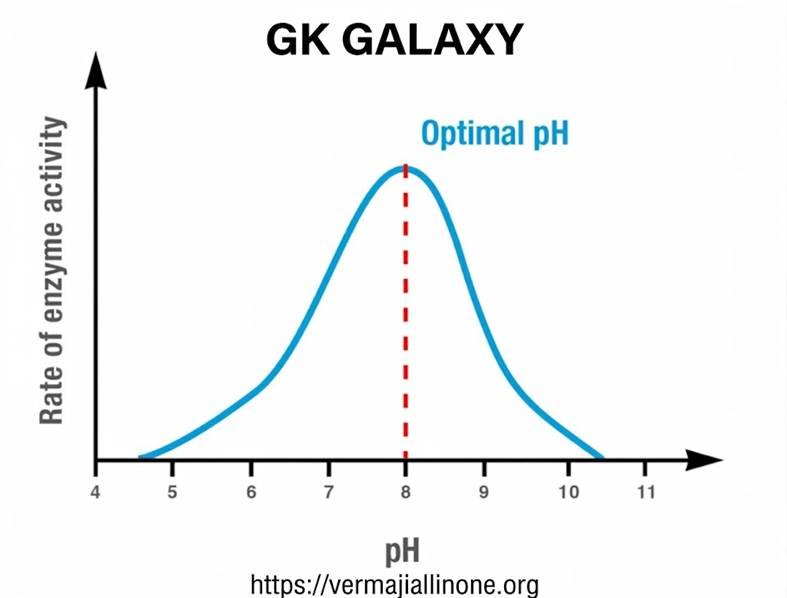
pH
Each enzyme has a suitable pH range. Changes in pH can alter the ionisation of active-site residues and the enzyme’s structure.
Substrate concentration
When the substrate concentration is low, increasing the substrate concentration usually increases the reaction rate.
When the substrate concentration becomes high, most of the enzyme active sites become occupied. The enzyme reaches saturation, and the reaction rate approaches its maximum value, called Vmax.
7.5 MICHAELIS–MENTEN EQUATION
For a simple enzyme-catalysed reaction, the reaction rate can be calculated using the Michaelis-Menten equation:
v = (Vmax x [S]) / (Km + [S])
Where:
v = Initial reaction rate
Vmax = Maximum reaction rate under specific conditions
[S] = Substrate concentration
Km = Michaelis constant
Important points:
- When the substrate concentration ([S]) is equal to Km, the reaction rate (v) is half of Vmax.
- A lower Km value can indicate greater apparent affinity between an enzyme and its substrate under the simple Michaelis-Menten model.
- Km is not always a direct measure of binding affinity because it depends on the rates of the enzyme-catalysed reaction.
Top of Form
Bottom of Form
7.6 ENZYME INHIBITION
Types of Enzyme Inhibition
1. Competitive Inhibition: The inhibitor competes with the substrate for the active site of the enzyme. In this type of inhibition, the apparent Km value increases, but Vmax remains unchanged. Increasing the substrate concentration can reduce the effect of competitive inhibition.
2. Pure Non-Competitive Inhibition: The inhibitor reduces the effective activity of the enzyme. In this type of inhibition, Vmax decreases, but Km remains unchanged.
3. Uncompetitive Inhibition: The inhibitor binds only to the enzyme-substrate complex. In this type of inhibition, both the apparent Km and Vmax values decrease.
7.7 CLASSIFICATION OF ENZYMES
The traditional NCERT/NEET presentation commonly uses six major classes:
| Class | Main reaction type | Example |
| Oxidoreductases | Oxidation–reduction | Dehydrogenases |
| Transferases | Transfer of functional groups | Transaminases |
| Hydrolases | Bond cleavage using water | Lipases |
| Lyases | Addition or removal of groups without hydrolysis or oxidation | Decarboxylases |
| Isomerases | Intramolecular rearrangements | Phosphoglucose isomerase |
| Ligases | Joining molecules, often coupled to ATP hydrolysis | DNA ligase |
Modern enzyme nomenclature also recognises a seventh class, translocases, which catalyse the movement of ions or molecules across membranes or their separation within membranes. For NEET questions, follow the classification specified in the relevant NCERT edition or examination syllabus.
7.8 ENZYMES IN DIGESTION
| Enzyme | Substrate | Major product(s) |
| Salivary amylase | Starch | Smaller carbohydrates |
| Pepsin | Proteins | Smaller peptides |
| Trypsin | Proteins and peptides | Smaller peptides |
| Pancreatic lipase | Triglycerides | Fatty acids and monoacylglycerols, with further products depending on conditions |
| Maltase | Maltose | Glucose |
| Lactase | Lactose | Glucose and galactose |
Important distinction: Enzymes are not limited to digestion. They also function in DNA replication, transcription, respiration, photosynthesis, cell signalling and metabolic regulation.
PART 2: NEET PREVIOUS-YEAR QUESTIONS (PYQS) WITH ANSWERS AND EXPLANATIONS
Question 1. Cofactor of carboxypeptidase
NEET-UG 2024
The cofactor required by the enzyme carboxypeptidase is:
A. Flavin
B. Haem
C. Zinc
D. Niacin
Correct answer: C. Zinc
Explanation: Carboxypeptidase is a zinc-containing metalloenzyme. Zinc ions help the enzyme catalyse the hydrolysis of peptide bonds. Flavin and haem participate in other biological processes, while niacin is a vitamin that contributes to coenzyme formation.
Repeated-question note: The prosthetic-group/cofactor concept has also appeared in NEET-UG 2019 and NEET-UG 2025, although the exact wording and enzyme
Question 2. Lecithin
NEET-UG 2024
Lecithin, an organic compound found in living tissues, is an example of:
A. Amino acids
B. Phospholipids
C. Glycerides
D. Carbohydrates
Correct answer: B. Phospholipids
Explanation: Lecithin is a phospholipid and an important component of biological membranes. Its hydrophilic and hydrophobic regions help it participate in membrane structure.
Question 3. Enzyme inhibition
NEET-UG 2024
Inhibition of succinate dehydrogenase by malonate is a classical example of:
A. Enzyme activation
B. Competitive inhibition
C. Cofactor inhibition
D. Feedback inhibition
Correct answer: B. Competitive inhibition
Explanation: Malonate resembles succinate structurally and competes for the enzyme’s active site. It inhibits the conversion of succinate to fumarate. Increasing substrate concentration can reduce the effect of a reversible competitive inhibitor.
Question 4. Protein, hormone and transporter matching
NEET-UG 2024
Match List I with List II.
| List I | List II |
| A. GLUT-4 | I. Hormone |
| B. Insulin | II. Enzyme |
| C. Trypsin | III. Intercellular ground substance |
| D. Collagen | IV. Enables glucose transport into cells |
Choose the correct sequence.
A. A–IV, B–I, C–II, D–III
B. A–I, B–II, C–III, D–IV
C. A–II, B–III, C–IV, D–I
D. A–III, B–IV, C–I, D–II
Correct answer: A. A–IV, B–I, C–II, D–III
Explanation:
GLUT-4 transports glucose across cell membranes.
Insulin is a hormone that regulates blood glucose.
Trypsin is a protein-digesting enzyme.
Collagen is a structural protein found in connective tissue.
Question 5. Bonds hydrolysed by enzymes
NEET-UG 2024
Match the enzymes with the bonds they act upon.
| List I | List II |
| A. Lipase | I. Peptide bond |
| B. Nuclease | II. Ester bond |
| C. Protease | III. Glycosidic bond |
| D. Amylase | IV. Phosphodiester bond |
A. A–IV, B–II, C–III, D–I
B. A–III, B–II, C–I, D–IV
C. A–II, B–IV, C–I, D–III
D. A–IV, B–I, C–III, D–II
Correct answer: C. A–II, B–IV, C–I, D–III
Explanation: Lipases hydrolyse ester bonds in lipids, nucleases cleave nucleic acids by breaking phosphodiester linkages, proteases hydrolyse peptide bonds, and amylases act on glycosidic bonds in starch.
Question 6. Effect of substrate concentration
NEET-UG 2024 Re-Examination
Which graph represents the effect of substrate concentration on the velocity of an enzyme-catalysed reaction?
A. A curve that increases and then approaches a plateau
B. A straight line that decreases continuously
C. A curve that remains at zero at every concentration
D. A curve that decreases continuously as substrate concentration increases
Correct answer: A. A curve that increases and then approaches a plateau
Explanation: When the substrate concentration is low, increasing the substrate concentration increases the reaction rate because more substrate molecules bind to the available enzymes.
When the substrate concentration becomes high, most enzyme active sites become occupied. The enzymes become saturated, and the reaction rate approaches its maximum value, called Vmax.
Question 7. Enzyme class
NEET-UG 2024 Re-Examination
Enzymes that remove groups from substrates by mechanisms other than hydrolysis, often leaving a double bond, belong to which class?
A. Hydrolases
B. Lyases
C. Ligases
D. Isomerases
Correct answer: B. Lyases
Explanation: Lyases catalyse the removal or addition of groups without the usual mechanisms of hydrolysis or oxidation. Removal of a group can result in the formation of a double bond.
Question 8. Protein structure
NEET-UG 2024 Re-Examination
Match the levels of protein structure with the appropriate descriptions.
| List I | List II |
| A. Primary structure | I. Human haemoglobin |
| B. Secondary structure | II. Disulphide bonds |
| C. Tertiary structure | III. Polypeptide chain sequence |
| D. Quaternary structure | IV. Alpha helix and beta sheet |
A. A–III, B–IV, C–II, D–I
B. A–II, B–III, C–I, D–IV
C. A–IV, B–I, C–III, D–II
D. A–I, B–II, C–IV, D–III
Correct answer: A. A–III, B–IV, C–II, D–I
Explanation: Primary structure is the amino acid sequence. Secondary structure includes alpha helices and beta sheets. Disulphide bonds can stabilise tertiary structure, and haemoglobin is a familiar example of a protein with quaternary structure.
Question 9. Fatty acids
NEET-UG 2024 Re-Examination
Which of the following are not fatty acids?
A. Glutamic acid
B. Arachidonic acid
C. Palmitic acid
D. Lecithin E. Aspartic acid
Choose the correct combination.
A. A and E only
B. B and C only
C. A, D and E only
D. B, C and D only
Correct answer: C. A, D and E only
Explanation: Glutamic acid and aspartic acid are amino acids. Lecithin is a phospholipid, not a fatty acid. Arachidonic acid and palmitic acid are fatty acids.
Question 10. Repeated concept: enzyme prosthetic groups
NEET-UG 2019
Consider the following statements about enzyme prosthetic groups:
- A coenzyme or metal ion tightly bound to an enzyme protein may act as a prosthetic group.
- Every enzyme functions independently of cofactors.
Which statement is correct?
A. Statement 1 only
B. Statement 2 only
C. Both statements
D. Neither statement
Correct answer: A. Statement 1 only
Explanation: A prosthetic group is a tightly bound non-protein component of an enzyme. Some enzymes require cofactors for catalytic activity, although not all enzymes need an additional cofactor. Therefore, the second statement is incorrect.
Repeated-question note: The cofactor/prosthetic-group concept was tested again in NEET-UG 2024 and NEET-UG 2025, with a related question on the haem prosthetic group in 2025. These are related concepts, not necessarily identical questions.
PART 3: ADDITIONAL NEET-LEVEL PRACTICE MCQS
Question 11. Reducing sugars
Which of the following is a non-reducing sugar?
A. Glucose
B. Maltose
C. Lactose
D. Sucrose
Answer: D. Sucrose
Explanation: In sucrose, the anomeric carbons of glucose and fructose are involved in the glycosidic bond. It therefore lacks a free anomeric carbon for the usual reducing-sugar reaction.
Question 12. Storage carbohydrate in animals
The principal storage polysaccharide in animals is:
A. Cellulose
B. Starch
C. Glycogen
D. Chitin
Answer: C. Glycogen
Explanation: Glycogen is a highly branched glucose polymer stored especially in liver and skeletal muscle.
Question 13. Bond between amino acids
Amino acids in a polypeptide are linked by:
A. Glycosidic bonds
B. Peptide bonds
C. Phosphodiester bonds
D. Hydrogen bonds only
Answer: B. Peptide bonds
Explanation: A peptide bond forms between the carboxyl group of one amino acid and the amino group of another.
Question 14. RNA sugar
Which sugar is present in RNA?
A. Deoxyribose
B. Ribose
C. Glucose
D. Fructose
Answer: B. Ribose
Explanation: RNA contains ribose, whereas DNA contains deoxyribose.
QUESTION 15. PURINE BASES
Which pair consists entirely of purine bases?
A. Adenine and guanine
B. Cytosine and thymine
C. Thymine and uracil
D. Cytosine and adenine
Answer: A. Adenine and guanine
Explanation: Adenine and guanine are purines. Cytosine, thymine and uracil are pyrimidines.
Question 16. Enzyme specificity
The region of an enzyme that binds its substrate and participates directly in catalysis is the:
A. Peptide backbone
B. Active site
C. Phosphate group
D. Cell membrane
Answer: B. Active site
Explanation: The active site contains residues that help recognise the substrate and facilitate the reaction.
Question 17. Competitive inhibition
In simple reversible competitive inhibition, which parameter remains unchanged?
A. Apparent Km
B. Vmax
C. Substrate affinity under all conditions
D. Enzyme active-site sequence
Correct Answer: B. Vmax
Explanation: In competitive inhibition, the inhibitor competes with the substrate for the enzyme’s active site. The apparent Km increases, but Vmax remains unchanged. The maximum reaction rate can still be reached by increasing the substrate concentration sufficiently.
Question 18. Biological catalysts
Which statement about enzymes is correct?
A. They change the equilibrium constant of a reaction.
B. They are consumed permanently during each reaction.
C. They lower the activation energy of a reaction.
D. They make every endergonic reaction occur without energy input.
Answer: C. They lower the activation energy of a reaction.
Explanation: Enzymes accelerate reactions by providing a lower-activation-energy pathway. They do not alter the equilibrium constant or remove the need for energy coupling in energetically unfavourable reactions.
Question 19. Cofactors
The protein portion of a conjugated enzyme without its required cofactor is called the:
A. Holoenzyme
B. Apoenzyme
C. Substrate
D. Product
Answer: B. Apoenzyme
Explanation: The apoenzyme is the protein component. When combined with the required cofactor, it forms the complete holoenzyme.
Question 20. Cellulose
Cellulose is composed primarily of:
A. Alpha-glucose units joined by alpha linkages
B. Beta-glucose units joined by beta-1,4 linkages
C. Fructose units joined by peptide bonds
D. Amino acids joined by glycosidic bonds
Answer: B. Beta-glucose units joined by beta-1,4 linkages
Explanation: Cellulose forms long, unbranched chains that provide structural strength to plant cell walls.
PART 4: IMPORTANT REVISION POINTS FOR NEET
Sucrose is non-reducing; maltose and lactose are reducing sugars.
Starch is a major storage polysaccharide in plants; glycogen is the principal storage polysaccharide in animals.
Cellulose contains beta-1,4-linked glucose units.
Peptide bonds link amino acids; glycosidic bonds link sugar units; phosphodiester bonds link nucleotides in nucleic acids.
DNA contains thymine, while RNA contains uracil.
Adenine and guanine are purines.
Carboxypeptidase requires zinc as a cofactor.
Malonate competitively inhibits succinate dehydrogenase.
In competitive inhibition, the apparent Km value increases, but Vmax remains unchanged. This occurs because the inhibitor competes with the substrate for the enzyme’s active site. Increasing the substrate concentration can overcome the effect of the inhibitor.
Enzymes lower activation energy but do not change reaction equilibrium.
Apoenzyme plus its required cofactor forms the holoenzyme.
Lyases catalyse certain eliminations or additions without hydrolysis or oxidation.
Protein primary structure is its amino acid sequence; quaternary structure concerns multiple polypeptide subunits.
Lipids are not generally true polymers of repeating monomers.
SECTION A: BIOMOLECULES — PREVIOUS-YEAR QUESTION REVIEW
Question 21. Protein portion of an enzyme
NEET-UG 2025
The protein portion of an enzyme is called:
A. Apoenzyme
B. Prosthetic group
C. Cofactor
D. Coenzyme
Correct answer: A. Apoenzyme
Explanation: The apoenzyme is the protein component of an enzyme that requires a non-protein cofactor. The complete functional enzyme, when its required cofactor is present, is called a holoenzyme.
Related PYQ concept: The enzyme cofactor/prosthetic-group concept was also tested in NEET-UG 2019 and NEET-UG 2024. These are related questions, not exact duplicates.
Question 22. Haem as a prosthetic group
NEET-UG 2025
Which of the following enzymes contains haem as its prosthetic group?
A. RuBisCO
B. Carbonic anhydrase
C. Succinate dehydrogenase
D. Catalase
Correct answer: D. Catalase
Explanation: Catalase contains haem, which participates in the breakdown of hydrogen peroxide into water and oxygen. Carbonic anhydrase contains zinc, while RuBisCO is involved in carbon fixation.
Repeated concept: NEET-UG 2019, NEET-UG 2024 and NEET-UG 2025 tested the broader concept of enzyme cofactors or prosthetic groups, using different question formulations.
Question 23. Enzyme class for transfer of a group
NEET-UG 2025
An enzyme catalyses the transfer of a group other than hydrogen from one substrate to another. It belongs to which class?
A. Transferases
B. Ligases
C. Hydrolases
D. Lyases
Correct answer: A. Transferases
Explanation: Transferases catalyse the transfer of functional groups between molecules. Examples include aminotransferases, which transfer amino groups.
Exam detail: This question is listed in chapter-wise NEET-UG 2025 Biology question collections.
Question 24. Sequence of enzyme action
NEET-UG 2024
Consider these stages of an enzyme-catalysed reaction:
- Substrate binds to the active site.
- An enzyme–substrate complex forms.
- Bonds are altered and products are formed.
- Products are released, leaving the enzyme available for another catalytic cycle.
Which sequence is correct?
A. 1 → 2 → 3 → 4
B. 2 → 1 → 4 → 3
C. 3 → 2 → 1 → 4
D. 4 → 3 → 2 → 1
Correct answer: A. 1 → 2 → 3 → 4
Explanation: Substrate binding leads to the enzyme–substrate complex. Catalysis then produces products, which are released so that the enzyme can catalyse another reaction.
Note: This is a study-friendly formulation of the enzyme catalytic-cycle concept, not a claim that the wording is identical to the original paper.
Question 25. Nature of enzymes
NEET-UG 2024
Which statement about enzymes is incorrect?
A. Enzymes generally show substrate specificity.
B. Some enzymes require metal ions.
C. All enzymes are proteinaceous in nature.
D. Some enzymes of thermophilic organisms function at high temperatures.
Correct answer: C. All enzymes are proteinaceous in nature.
Explanation: Most enzymes are proteins, but some RNA molecules, known as ribozymes, possess catalytic activity. Therefore, the statement that all enzymes are proteins is incorrect.
Related concept: NEET-UG 2025 also tested enzyme classification and enzyme-related concepts. These questions are related but are not necessarily repetitions of this particular statement-based question.
Question 26. Zwitterion
NEET-UG 2024
Which of the following can exist as a zwitterion?
A. Fatty acid
B. Monosaccharide
C. Amino acid
D. Triglyceride
Correct answer: C. Amino acid
Explanation: Amino acids can contain a positively charged amino group and a negatively charged carboxylate group in the same molecule. At a suitable pH, both charges coexist, producing a zwitterion.
Question 27. Non-protein biological catalyst
NEET-UG 2024
A catalytic RNA molecule is called a:
A. Ribozyme
B. Ribosome
C. Nucleosome
D. Lysosome
Correct answer: A. Ribozyme
Explanation: Ribozymes are RNA molecules that catalyse biochemical reactions. Their existence demonstrates that catalytic activity is not restricted to proteins.
Question 28. Cofactor and coenzyme relationship
NEET-UG 2024
Which statement correctly describes a coenzyme?
A. It is always a protein.
B. It is an organic non-protein component that assists an enzyme.
C. It is always the substrate of an enzyme.
D. It permanently destroys the enzyme after one reaction.
Correct answer: B. It is an organic non-protein component that assists an enzyme.
Explanation: Coenzymes are organic cofactors that participate in enzyme-catalysed reactions. Many are derived from vitamins and assist in transferring electrons or chemical groups.
SECTION B: ADDITIONAL BIOMOLECULES MCQS
Question 29. Adenosine and adenylate
NEET-UG 2025
Match the following compounds with their correct descriptions.
| List I | List II |
| A. Adenosine | I. Nitrogenous base |
| B. Adenylic acid | II. Nucleotide |
| C. Adenine | III. Nucleoside |
| D. Alanine | IV. Amino acid |
Choose the correct option.
A. A–III, B–II, C–I, D–IV
B. A–II, B–III, C–IV, D–I
C. A–I, B–IV, C–II, D–III
D. A–IV, B–I, C–III, D–II
Correct answer: A. A–III, B–II, C–I, D–IV
Explanation:
Adenosine consists of adenine and ribose, so it is a nucleoside.
Adenylic acid, or AMP, is a nucleotide containing adenine, ribose and phosphate.
Adenine is a purine nitrogenous base.
Alanine is an amino acid.
Question 30. Most abundant protein in the biosphere
NEET-UG 2023
Which of the following is considered the most abundant protein in the biosphere?
A. Collagen
B. RuBisCO
C. Haemoglobin
D. Insulin
Correct answer: B. RuBisCO
Explanation: Ribulose-1,5-bisphosphate carboxylase/oxygenase (RuBisCO) participates in carbon fixation during photosynthesis. It is generally described as the most abundant protein in the biosphere.
Question 31. Denaturation of proteins
NEET-UG 2023
Protein denaturation generally results in:
A. The complete breakdown of all peptide bonds
B. Loss of the primary structure in every case
C. Disruption of secondary and tertiary structures
D. Formation of new amino acids from the protein
Correct answer: C. Disruption of secondary and tertiary structures
Explanation: Denaturation disrupts the native folding of a protein. The primary amino acid sequence generally remains intact because denaturation does not ordinarily hydrolyse peptide bonds.
Question 32. Enzyme prosthetic groups — repeated concept record
Repeated concept: 2019, 2024 and 2025
Which enzyme contains haem as a prosthetic group?
A. Carbonic anhydrase
B. Catalase
C. Carboxypeptidase
D. RuBisCO
Correct answer: B. Catalase
Explanation: Catalase contains haem, which enables the enzyme to catalyse the decomposition of hydrogen peroxide.
Question 33. Glycosidic linkage
Exam: NEET-UG syllabus-based practice, 2026
Which linkage joins glucose units in the linear portion of amylose?
A. β-1,4-glycosidic linkage
B. α-1,4-glycosidic linkage
C. Peptide linkage
D. Phosphodiester linkage
Correct answer: B. α-1,4-glycosidic linkage
Explanation: Amylose is a largely unbranched component of starch. Its glucose units are joined by α-1,4-glycosidic linkages. Amylopectin also contains α-1,6 linkages at branch points.
Question 34. Essential amino acids
Exam: NEET-UG syllabus-based practice, 2026
Which amino acid is essential in the human diet?
A. Alanine
B. Aspartic acid
C. Lysine
D. Glutamic acid
Correct answer: C. Lysine
Explanation: Humans cannot synthesise sufficient lysine to meet their requirements, so it must be obtained from dietary sources.
Question 35. DNA nucleotide
Exam: NEET-UG syllabus-based practice, 2026
Which components are present in a DNA nucleotide?
A. Ribose, uracil and phosphate
B. Deoxyribose, a nitrogenous base and phosphate
C. Glucose, adenine and peptide
D. Glycerol, fatty acid and phosphate only
Correct answer: B. Deoxyribose, a nitrogenous base and phosphate
Explanation: DNA nucleotides contain deoxyribose, a nitrogenous base and one or more phosphate groups. The base may be adenine, guanine, cytosine or thymine.
Question 36. Enzyme activity and pH
Exam: NEET-UG syllabus-based practice, 2026
Why does a large change in pH often reduce enzyme activity?
A. It converts every enzyme into a carbohydrate.
B. It may alter ionisation of active-site groups and disrupt the enzyme’s structure.
C. It always increases substrate concentration.
D. It changes the genetic code of the enzyme immediately.
Correct answer: B. It may alter ionisation of active-site groups and disrupt the enzyme’s structure.
Explanation: Enzyme catalysis depends on suitable chemical conditions. A substantial pH change can alter the charges of amino acid side chains and interfere with substrate binding or catalysis.
Question 37. Maximum reaction velocity
Exam: NEET-UG syllabus-based practice, 2026
In the Michaelis-Menten model, what happens when the substrate concentration becomes very high?
A. The reaction rate approaches Vmax.
B. The enzyme is permanently consumed.
C. The reaction rate falls to zero.
D. The amino acid sequence of the enzyme changes.
Correct Answer: A. The reaction rate approaches Vmax.
Explanation: At high substrate concentrations, most of the enzyme’s active sites become occupied. The enzyme approaches saturation, and the reaction rate approaches its maximum value, called Vmax.
Question 38. Cellulose structure
Examination: NEET-UG syllabus-based practice, 2026
Cellulose is composed of glucose units joined primarily by:
A. α-1,4-glycosidic bonds
B. β-1,4-glycosidic bonds
C. Peptide bonds
D. Phosphodiester bonds
Correct answer: B. β-1,4-glycosidic bonds
Explanation: Cellulose is a structural polysaccharide in plant cell walls. Its β-1,4-linked glucose chains form strong fibres through interactions between adjacent chains. Humans cannot digest cellulose because they lack cellulase.
Question 39. Structure of triglycerides
Examination: NEET-UG syllabus-based practice, 2026
A typical triglyceride consists of:
A. Three amino acids and one phosphate group
B. Glycerol and three fatty acids
C. Three glucose molecules and one nitrogenous base
D. Ribose and three phosphate groups
Correct answer: B. Glycerol and three fatty acids
Explanation: A triglyceride contains a glycerol molecule esterified with three fatty acids. Triglycerides serve primarily as energy-storage molecules.
Question 40. DNA and RNA bases
Examination: NEET-UG syllabus-based practice, 2026
Which nitrogenous base is normally present in RNA but absent from DNA?
A. Adenine
B. Guanine
C. Cytosine
D. Uracil
Correct answer: D. Uracil
Explanation: RNA contains uracil in place of thymine. DNA normally contains adenine, guanine, cytosine and thymine.
Question 41. Enzyme specificity
Examination: NEET-UG syllabus-based practice, 2026
The ability of an enzyme to recognise a particular substrate is primarily associated with its:
A. Active-site structure and chemical properties
B. Total number of atoms in the cell
C. Location of the organism’s chromosomes
D. Concentration of cellulose in the cell wall
Correct answer: A. Active-site structure and chemical properties
Explanation: The shape, charge and chemical environment of the active site help determine which substrates an enzyme recognises and which reactions it catalyses.
Question 42. Competitive inhibition
Examination: NEET-UG syllabus-based practice, 2026
In the simple reversible competitive-inhibition model, increasing the substrate concentration can overcome inhibition because:
A. The inhibitor permanently destroys the enzyme.
B. The substrate competes with the inhibitor for the active site.
C. The inhibitor becomes a peptide bond.
D. The enzyme’s primary structure is immediately restored.
Correct answer: B. The substrate competes with the inhibitor for the active site.
Explanation: A competitive inhibitor competes with the substrate for the active site of an enzyme. When the substrate concentration is sufficiently high, the substrate can overcome the effect of the inhibitor.
In competitive inhibition, the apparent Km value increases, but Vmax remains unchanged in the simple model.
Question 43. Coenzymes
Examination: NEET-UG syllabus-based practice, 2026
Which statement about coenzymes is correct?
A. All coenzymes are proteins.
B. Coenzymes are organic molecules that assist enzyme-catalysed reactions.
C. Coenzymes are always polysaccharides.
D. Coenzymes permanently destroy enzymes after catalysis.
Correct answer: B. Coenzymes are organic molecules that assist enzyme-catalysed reactions.
Explanation: Coenzymes are organic cofactors. Examples include NAD⁺ and coenzyme A, which participate in electron or chemical-group transfer.
Question 44. Protein denaturation
Examination: NEET-UG syllabus-based practice, 2026
Which treatment can cause denaturation of many proteins?
A. Exposure to sufficiently high temperatures
B. Addition of amino acids under every condition
C. Formation of a peptide bond
D. Replication of DNA
Correct answer: A. Exposure to sufficiently high temperatures
Explanation: High temperatures can disrupt interactions that maintain protein folding. Denaturation usually affects secondary, tertiary or quaternary structure, without necessarily breaking the peptide bonds of the primary structure.
Question 45. Purine bases
Examination: NEET-UG syllabus-based practice, 2026
Which pair consists of purine bases?
A. Cytosine and thymine
B. Adenine and guanine
C. Uracil and cytosine
D. Thymine and uracil
Correct answer: B. Adenine and guanine
Explanation: Purines have a two-ring structure. Adenine and guanine are purines, whereas cytosine, thymine and uracil are pyrimidines.
Question 46. Enzyme classification
Examination: NEET-UG syllabus-based practice, 2026
An enzyme that joins two molecules using energy from ATP generally belongs to which traditional enzyme class?
A. Hydrolases
B. Isomerases
C. Ligases
D. Oxidoreductases
Correct answer: C. Ligases
Explanation: Ligases catalyse the joining of molecules, often coupled to ATP hydrolysis. DNA ligase joins DNA fragments by forming phosphodiester bonds.
Question 47. Michaelis constant
Examination: NEET-UG syllabus-based practice, 2026
In a simple Michaelis-Menten enzyme model, when is the reaction rate equal to half of Vmax?
A. When substrate concentration is zero
B. When substrate concentration is equal to Km
C. When substrate concentration is equal to 2 times Vmax
D. When enzyme concentration is zero
Correct Answer: B. When substrate concentration is equal to Km
Explanation: According to the Michaelis-Menten equation:
v = (Vmax x [S]) / (Km + [S])
When the substrate concentration ([S]) is equal to Km, the reaction rate (v) becomes half of Vmax. Therefore, v = Vmax/2.
Question 48. Inulin — carbohydrate composition
NEET-UG 2023 (Manipur)
Inulin is a polymer of which monosaccharide?
A. Fructose
B. Galactose
C. Amino acids
D. Glucose
Correct answer: A. Fructose
Explanation: Inulin is a fructan, a polysaccharide composed mainly of fructose units. It occurs in the storage tissues of several plants. Unlike starch, which is made of glucose units, inulin is primarily a polymer of fructose.
Question 49. Primary and secondary metabolites
NEET-UG 2023 (Manipur)
Which of the following is classified as a primary metabolite rather than a secondary metabolite?
A. Curcumin
B. Morphine
C. Anthocyanin
D. Lecithin
Correct answer: D. Lecithin
Explanation: Lecithin is a phospholipid involved in membrane structure and normal cellular function. Curcumin, morphine and anthocyanin are commonly classified as secondary metabolites in the NCERT discussion.
Question 50. Iodine test and cellulose
NEET-UG 2023
Why does cellulose fail to produce the characteristic blue colour with iodine?
A. It is a helical molecule.
B. It lacks the complex helical structure needed to accommodate iodine.
C. Iodine breaks cellulose into monosaccharides.
D. Cellulose is a disaccharide.
Correct answer: B. It lacks the complex helical structure needed to accommodate iodine.
Explanation: Starch, particularly amylose, can form a helical structure that accommodates iodine and produces a characteristic colour. Cellulose consists of straight, β-1,4-linked glucose chains and does not form the same iodine-binding complex.
Question 51. Enzyme activity and inhibition
NEET-UG 2023
Consider the following statements.
Statement I: Low temperatures can temporarily reduce enzyme activity, whereas sufficiently high temperatures can denature many enzymes.
Statement II: A competitive inhibitor competes with the substrate for enzyme binding, often because it resembles the substrate.
Choose the correct option.
A. Both statements are false.
B. Statement I is true, but Statement II is false.
C. Statement I is false, but Statement II is true.
D. Both statements are true.
Correct answer: D. Both statements are true.
Explanation: Low temperatures generally slow molecular reactions without necessarily denaturing the enzyme. High temperatures can disrupt the protein’s structure. Competitive inhibitors occupy the active site and reduce substrate binding.
Question 52. Prosthetic group of a peroxide-degrading enzyme
NEET-UG 2022 Phase 2
The enzyme responsible for decomposing hydrogen peroxide into water and oxygen contains which prosthetic group?
A. Niacin
B. Nicotinamide adenine dinucleotide
C. Haem
D. Zinc
Correct answer: C. Haem
Explanation: Catalase is an enzyme that contains haem with iron. It breaks down hydrogen peroxide into water and oxygen.
Reaction:
2H2O2 -> 2H2O + O2
Haem contains iron, which helps catalase carry out this reaction.
Question 53. Formula of maltose
NEET-UG 2022 Phase 1
Two glucose molecules combine by removing one water molecule to form maltose. What is the molecular formula of maltose?
A. C12H20O10
B. C12H24O12
C. C12H22O11
D. C12H24O11
Correct Answer: C. C12H22O11
Explanation: Two glucose molecules combine and release one water molecule to form maltose.
Glucose formula: C6H12O6
Reaction:
C6H12O6 + C6H12O6 – H2O = C12H22O11
Maltose is a disaccharide made up of two glucose units joined by a glycosidic bond.Top of Form
Bottom of Form
Question 54. Glycosidic and peptide bonds
NEET-UG 2020 Phase 1
Which option contains, respectively, a molecule with glycosidic bonds and a molecule with peptide bonds?
A. Glycerol and trypsin
B. Cellulose and lecithin
C. Inulin and insulin
D. Chitin and cholesterol
Correct answer: C. Inulin and insulin
Explanation: Inulin contains fructose units linked by glycosidic bonds. Insulin is a protein, and its amino acids are joined by peptide bonds. Trypsin also contains peptide bonds, but glycerol does not contain glycosidic bonds.
Question 55. Most abundant protein in animals
NEET-UG 2020 Phase 1
Which is the most abundant protein in the animal world?
A. Collagen
B. Lectin
C. Insulin
D. Haemoglobin
Correct answer: A. Collagen
Explanation: Collagen is the most abundant protein in animals. It is a fibrous structural protein found extensively in connective tissues and the extracellular matrix.
Remember the distinction: RuBisCO is generally described as the most abundant protein in the biosphere, while collagen is the most abundant protein in the animal world.
Question 56. Matching biological molecules with their bonds
Examination: NEET-UG 2021
Match List I with List II.
| List I | List II |
| (a) Protein | (i) C=C double bonds |
| (b) Unsaturated fatty acid | (ii) Phosphodiester bonds |
| (c) Nucleic acid | (iii) Glycosidic bonds |
| (d) Polysaccharide | (iv) Peptide bonds |
Choose the correct answer.
A. (a)–(iv), (b)–(i), (c)–(ii), (d)–(iii)
B. (a)–(i), (b)–(iv), (c)–(iii), (d)–(ii)
C. (a)–(ii), (b)–(i), (c)–(iv), (d)–(iii)
D. (a)–(iv), (b)–(iii), (c)–(i), (d)–(ii)
Correct answer: A
Explanation:
Proteins contain amino acids joined by peptide bonds.
Unsaturated fatty acids contain one or more carbon–carbon double bonds.
Nucleotides in nucleic acids are connected through phosphodiester bonds.
Monosaccharide units in polysaccharides are joined by glycosidic bonds.
Question 57. Concanavalin A
Examination: NEET-UG 2019
Concanavalin A is:
A. A pigment
B. An alkaloid
C. An essential oil
D. A lectin
Correct answer: D. A lectin
Explanation: Concanavalin A is a carbohydrate-binding protein classified as a lectin. Lectins bind specific carbohydrate structures and are useful in studies of cell recognition and interactions between biomolecules.
Question 58. Pantothenic acid and biotin
Examination: AIPMT 1999
Pantothenic acid and biotin are associated with which vitamin group?
A. Vitamin D
B. Vitamin
B complex
C. Vitamin K
D. Vitamin E
Correct answer: B. Vitamin B complex
Explanation: Pantothenic acid is vitamin B5, while biotin is vitamin B7. Both belong to the B-complex group and participate in metabolic processes, including reactions involving enzyme cofactors.
Question 59. Cellulose structure
Examination: AIPMT 1998
Which statement correctly describes the cellulose molecule?
A. It has β-1,4 linkages and is unbranched.
B. It has β-1,4 linkages and is branched.
C. It has α-1,4 linkages and is branched.
D. It has β-1,6 linkages and is unbranched.
Correct answer: A. It has β-1,4 linkages and is unbranched.
Explanation: Cellulose is composed of linear chains of β-D-glucose units linked by β-1,4-glycosidic bonds. Hydrogen bonding between neighbouring chains contributes to its strength and structural role in plant cell walls.
Question 60. Which of the following is NOT a complex polysaccharide?
Exam: NEET-UG 2024
A. Chitin
B. Inulin
C. Cellulose
D. Starch
Correct Answer: B. Inulin
Explanation: Inulin is a polysaccharide made mainly of fructose units. In the context of this question, it is distinguished from complex structural or storage polysaccharides such as chitin, cellulose and starch. Chitin occurs in arthropod exoskeletons and fungal cell walls; cellulose forms plant cell walls; starch is a major storage carbohydrate in plants.
Correction to Question 60: The original option set reported in the question bank is: (A) Inulin,
(B) Chitin,
(C) Glucosamine, and
(D) N-acetyl galactosamine.
The correct answer remains A. Inulin.
Question 61. Which secondary structure of a protein is associated with the lipid layer and lines the pores of the cell membrane?
A. Alpha-helix
B. Beta-strand
C. Beta-chain
D. Random structure
Correct Answer: B. Beta-strand
Explanation: Beta-strands can associate to form beta-sheets and beta-barrel structures. Certain membrane proteins use beta-barrels to form channels or pores through the lipid bilayer. This question tests the relationship between protein secondary structure and membrane architecture.
Question 62. Which factor is responsible for feedback inhibition of an enzymatic process?
Exam: AIPMT 2000
A. Substrate
B. Enzyme
C. End product
D. Temperature
Correct Answer: C. End product
Explanation: In feedback inhibition, the final product of a metabolic pathway inhibits an enzyme that acts earlier in that pathway. This prevents unnecessary product formation and conserves cellular resources. It is a form of metabolic regulation.
Question 63. ATP is classified as a:
Exam: AIPMT 2000
A. Nucleotide
B. Nucleoside
C. Nucleic acid
D. Vitamin
Correct Answer: A. Nucleotide
Explanation: ATP (adenosine triphosphate) consists of adenine, ribose sugar and three phosphate groups. A nitrogenous base + sugar + phosphate group(s) forms a nucleotide. A nucleoside contains only a nitrogenous base and sugar, without phosphate.
Question 64. Which of the following is an essential amino acid?
Exam: AIPMT 2000
A. Phenylalanine
B. Glycine
C. Aspartic acid
D. Serine
Correct Answer: A. Phenylalanine
Explanation: Essential amino acids cannot be synthesised by the human body in sufficient amounts and must be obtained through the diet. Phenylalanine is an essential amino acid. Glycine, aspartic acid and serine are generally classified as non-essential amino acids.
Question 65. Which protein is found in the maximum amount in the animal kingdom?
Exam: AIPMT 2002
A. Collagen
B. Haemoglobin
C. Insulin
D. Albumin
Correct Answer: A. Collagen
Explanation: Collagen is a fibrous structural protein and is the most abundant protein in the animal kingdom. It is a major component of connective tissues, including skin, tendons, ligaments and cartilage.
Important distinction: This question asks about the animal kingdom. RuBisCO, by contrast, is commonly identified as the most abundant protein in the biosphere because of its widespread role in photosynthesis. These are different facts and should not be confused.
Question 66. What is the role of an enzyme in a chemical reaction?
Exam: AIPMT 2000
A. It decreases the activation energy.
B. It increases the activation energy.
C. It acts as an inorganic catalyst.
D. It changes the final equilibrium of the reaction.
Correct Answer: A. It decreases the activation energy.
Explanation: Enzymes accelerate biochemical reactions by providing an alternative reaction pathway with lower activation energy. They are biological catalysts and are not consumed permanently during the reactions they catalyse. Enzymes do not change the equilibrium position of a reaction.
Question 67. Which of the following has a carbohydrate component as part of its structure?
Exam: AIPMT 2000
A. Glycoprotein
B. Chromoprotein
C. Lipoprotein
D. Nucleoprotein
Correct Answer: A. Glycoprotein
Explanation: Glycoproteins contain carbohydrate chains covalently attached to proteins. They are found in cell membranes, mucus and many biological recognition systems. Chromoproteins contain a coloured prosthetic group, lipoproteins contain lipid components, and nucleoproteins are associated with nucleic acids.
Question 68. Enzymes are composed of which of the following?
Exam: AIPMT 2002
A. Edible proteins
B. Proteins with specific structures
C. Nitrogen-containing carbohydrates
D. Carbohydrates
Correct Answer: B. Proteins with specific structures
Explanation: Most enzymes are proteins with specific three-dimensional structures that enable catalysis. However, some RNA molecules, called ribozymes, also possess catalytic activity. Therefore, it is inaccurate to state that every enzyme is proteinaceous.
Question 69. Which of the following enzymes hydrolyses triglycerides into fatty acids and glycerol?
Exam: AIPMT 2004
A. Lipase
B. Zymase
C. Pepsin
D. Maltase
Correct Answer: A. Lipase
Explanation: Lipases catalyse the hydrolysis of fats. Triglycerides contain glycerol linked to three fatty acids by ester bonds. Complete hydrolysis releases glycerol and fatty acids.
Question 70. Which hormone facilitates the conversion of glucose into glycogen?
Exam: AIPMT 2004
A. Bile acids
B. Adrenaline
C. Insulin
D. Cortisone
Correct Answer: C. Insulin
Explanation: Insulin is secreted by the beta cells of the pancreas. It promotes glucose uptake in insulin-sensitive tissues and supports glycogen synthesis, particularly in the liver and skeletal muscles. Adrenaline generally promotes the mobilisation of stored energy.
Question 71. Which vitamin is correctly matched with its chemical name?
Exam: AIPMT 2001
A. Vitamin E — Tocopherol
B. Vitamin D — Riboflavin
C. Vitamin B — Calciferol
D. Vitamin A — Thiamine
Correct Answer: A. Vitamin E — Tocopherol
Explanation: Vitamin E is commonly known as tocopherol. Vitamin D is associated with calciferols, vitamin B2 is riboflavin, and vitamin B1 is thiamine.
Question 72. The most abundant organic compound on Earth is:
Exam: AIPMT 2001; also reported in AIPMT 2004
A. Protein
B. Cellulose
C. Lipids
D. Steroids
Correct Answer: B. Cellulose
Explanation: Cellulose is a structural polysaccharide composed of glucose units linked by beta-1,4 glycosidic bonds. It is the major structural component of plant cell walls and is widely described in biology textbooks as the most abundant organic compound on Earth.
Repeated appearance: The same question is reported for AIPMT 2001 and AIPMT 2004. It is included only once here, with both years listed.
Question 73. Which of the following is a basic amino acid?
Exam: NEET-UG 2020
A. Serine
B. Alanine
C. Tyrosine
D. Lysine
Correct Answer: D. Lysine
Explanation: Lysine has an additional basic amino group in its side chain. It is classified as a basic amino acid. Serine, alanine and tyrosine are generally classified as neutral amino acids.
Question 74. The helical structure of a protein is stabilised by:
Exam: AIPMT 2004
A. Hydrogen bonds
B. Ether bonds
C. Peptide bonds alone
D. Dipeptide bonds
Correct Answer: A. Hydrogen bonds
Explanation: The alpha-helix is a secondary structure of proteins. It is stabilised mainly by hydrogen bonds between the carbonyl oxygen of one peptide bond and the N–H group of another peptide bond farther along the polypeptide chain.
Question 75. Which functional group participates in disulphide bond formation in proteins?
Exam: AIPMT 2005
A. Thioether
B. Thiol
C. Thioester
D. Thiolactone
Correct Answer: B. Thiol
Explanation: The thiol group (–SH) of cysteine can be oxidised to form a disulphide bond (–S–S–) between two cysteine residues. These bonds help stabilise the three-dimensional structure of proteins.
Question 76. A typical fat molecule is made up of:
Exam: NEET-UG 2016 Phase 1
A. Three glycerol molecules and one fatty acid molecule
B. One glycerol molecule and three fatty acid molecules
C. One glycerol molecule and one fatty acid molecule
D. Three glycerol molecules and three fatty acid molecules
Correct Answer: B. One glycerol molecule and three fatty acid molecules
Explanation: A typical fat, or triglyceride, consists of one glycerol molecule esterified with three fatty acid molecules. The ester bonds form through condensation reactions. Triglycerides serve primarily as energy-storage molecules.
Question 77. Which of the following is a nucleotide?
Exam: NEET-UG 2025
A. Adenine
B. Adenosine
C. Adenylic acid
D. Alanine
Correct Answer: C. Adenylic acid
Explanation: A nucleotide contains a nitrogenous base, a pentose sugar and one or more phosphate groups. Adenylic acid, also called AMP (adenosine monophosphate), contains adenine, ribose and phosphate. Adenine is a nitrogenous base, adenosine is a nucleoside, and alanine is an amino acid.
Quick revision
| Concept | Key fact |
| Basic amino acid | Lysine |
| Alpha-helix | Stabilised by hydrogen bonds |
| Disulphide bond | Formed from cysteine thiol groups |
| Triglyceride | One glycerol + three fatty acids |
| Nucleotide | Base + sugar + phosphate |
Question 78. Which of the following is the non-essential amino acid?
Exam: NEET-UG 2019
NEET Previous Year Questions
A. Valine
B. Leucine
C. Lysine
D. Alanine
Correct Answer: D. Alanine
Explanation: Alanine is a non-essential amino acid because the human body can synthesise it. Valine, leucine and lysine are essential amino acids and must be obtained through the diet.
Question 79. Sucrose on hydrolysis gives:
Exam: NEET-UG 2020, Phase 1
A. Beta-D-glucose + alpha-D-fructose
B. Alpha-D-glucose + beta-D-glucose
C. Alpha-D-glucose + beta-D-fructose
D. Alpha-D-fructose + beta-D-fructose
Correct Answer: C. Alpha-D-glucose + beta-D-fructose
Explanation: Sucrose is a disaccharide composed of glucose and fructose. Hydrolysis breaks its glycosidic bond and releases glucose and fructose. The conventional structural description of sucrose contains alpha-D-glucose and beta-D-fructose units.
Question 80. Which statement regarding enzymes is incorrect?
Exam: NEET-UG 2022, Phase 1
A. Enzymes are specific for particular reactions and substrates.
B. Enzymes act as biological catalysts.
C. Enzymes lower the activation energy of biochemical reactions.
D. Enzymes are polysaccharides.
Correct Answer: D. Enzymes are polysaccharides.
Explanation: Most enzymes are proteins, while some RNA molecules also have catalytic activity. Enzymes accelerate reactions by lowering activation energy; they are not polysaccharides.
Question 81. Which of the following is a basic amino acid?
Exam: NEET-UG 2020
A. Serine
B. Alanine
C. Tyrosine
D. Lysine
Correct Answer: D. Lysine
Explanation: Lysine contains an additional amino group in its side chain, giving it basic properties. Serine, alanine and tyrosine are generally classified as neutral amino acids.
Question 82. Which of the following pairs is correctly matched?
Exam: NEET-UG 2021
A. Protein — Glycosidic bonds
B. Unsaturated fatty acid — C=C double bonds
C. Nucleic acid — Peptide bonds
D. Polysaccharide — Phosphodiester bonds
Correct Answer: B. Unsaturated fatty acid — C=C double bonds
Explanation: Unsaturated fatty acids contain one or more carbon-carbon double bonds. Amino acids in proteins are joined by peptide bonds, nucleotides in nucleic acids by phosphodiester bonds, and monosaccharide units in polysaccharides by glycosidic bonds.
Revision table
| Topic | Important fact |
| Non-essential amino acid | Alanine |
| Sucrose hydrolysis | Glucose + fructose |
| Enzymes | Mostly proteins; some catalytic RNA |
| Basic amino acid | Lysine |
| Unsaturated fatty acid | Contains C=C double bond |
| Protein linkage | Peptide bond |
| Nucleic acid linkage | Phosphodiester bond |
| Polysaccharide linkage | Glycosidic bond |
Question 83. During digestion, proteins are hydrolysed into polypeptides and then into amino acids. The enzymes responsible, respectively, are:
Exam: AIPMT 2006
A. Amylase and maltase
B. Diastase and lipase
C. Pepsin and trypsin
D. Invertase and zymase
Correct Answer: C. Pepsin and trypsin
Explanation: Pepsin acts in the acidic environment of the stomach and breaks proteins into smaller peptides. Trypsin acts in the small intestine and helps digest proteins and peptides further. Complete protein digestion involves several enzymes, including other pancreatic and intestinal peptidases.
Question 84. Which statement about amino acids and proteins is NOT correct?
Exam: AIPMT 2004
A. The alpha-carbon of an alpha-amino acid is asymmetric except in glycine.
B. Human proteins are composed predominantly of L-amino acids.
C. The human body can synthesise all the proteins it needs without obtaining essential amino acids from food.
D. At pH 7, amino and carboxyl groups can exist in ionised forms.
Correct Answer: C. The human body can synthesise all the proteins it needs without obtaining essential amino acids from food.
Explanation: The body requires essential amino acids from dietary sources because it cannot synthesise them in sufficient quantities. These amino acids are used to build proteins. Glycine is achiral because its alpha-carbon has two hydrogen atoms.
Question 85. DNA and RNA are chiral molecules mainly because of their:
Exam: AIPMT 2007
A. L-sugar component
B. Chiral nitrogenous bases
C. Chiral phosphate group D.
D-sugar component
Correct Answer: D. D-sugar component
Explanation: The sugars in naturally occurring DNA and RNA are D-deoxyribose and D-ribose, respectively. Their stereochemistry contributes to the chirality of nucleic acid molecules.
Question 86. Which of the following compounds does NOT reduce Fehling’s solution?
Exam: AIPMT 1999
A. Glucose
B. Fructose
C. Sucrose
D. Maltose
Correct Answer: C. Sucrose
Explanation: Sucrose is a non-reducing sugar because both anomeric carbons are involved in its glycosidic bond. Glucose and maltose are reducing sugars. Fructose also gives a positive Fehling’s test because it can undergo tautomerisation under the alkaline test conditions.
Question 87. Which of the following are NOT secondary metabolites in plants?
Exam: NEET-UG 2021
A. Morphine and codeine
B. Amino acids and glucose
C. Vinblastine and curcumin
D. Rubber and gums
Correct Answer: B. Amino acids and glucose
Explanation: Amino acids and glucose are primary metabolites involved in fundamental processes such as protein synthesis and cellular respiration. Morphine, codeine, vinblastine and curcumin are examples of secondary metabolites. Rubber and many plant gums are also commonly discussed in the context of secondary products.
QUICK REVISION: QUESTIONS 83–87
| Topic | Key fact |
| Protein digestion | Pepsin and trypsin participate in protein breakdown |
| Essential amino acids | Must be obtained through the diet |
| Nucleic acid chirality | Associated with D-ribose and D-deoxyribose |
| Fehling’s test | Sucrose is non-reducing |
| Primary metabolites | Include glucose and amino acids |
Question 88. The two polypeptide chains of human insulin are linked together by:
Exam: NEET-UG 2016 Phase 1
A. Hydrogen bonds
B. Phosphodiester bonds
C. Covalent bonds
D. Disulphide bridges
Correct Answer: D. Disulphide bridges
Explanation: Mature human insulin contains two polypeptide chains, A and B, connected by two interchain disulphide bridges. An additional disulphide bond occurs within the A chain. These bonds help maintain insulin’s functional structure.
Question 89. Which of the following is a non-proteinaceous enzyme?
Exam: NEET-UG 2016 Phase 2
A. Pepsin
B. Trypsin
C. Ribozyme
D. Amylase
Correct Answer: C. Ribozyme
Explanation: A ribozyme is an RNA molecule that catalyses a biochemical reaction. Pepsin, trypsin and amylase are protein enzymes. Ribozymes demonstrate that catalytic activity is not restricted to proteins.
Question 90. The chitinous exoskeleton of arthropods is formed by the polymerisation of:
Exam: AIPMT 2015
A. N-acetyl glucosamine
B. Lipoglycans
C. Keratan sulphate and chondroitin sulphate D.
D-glucosamine
Correct Answer: A. N-acetyl glucosamine
Explanation: Chitin is a structural polysaccharide made of repeating N-acetylglucosamine units joined by beta-1,4 glycosidic linkages. It provides mechanical strength to the exoskeletons of arthropods and is also found in fungal cell walls.
Question 91. Which of the following biomolecules contains phosphodiester bonds?
Exam: AIPMT 2015
A. Triacylglycerol
B. Protein
C. Nucleic acid
D. Starch
Correct Answer: C. Nucleic acid
Explanation: Phosphodiester bonds connect adjacent nucleotides in the sugar-phosphate backbone of DNA and RNA. Proteins contain peptide bonds, starch contains glycosidic bonds, and triacylglycerols contain ester bonds.
Question 92. Which interaction is LEAST likely to be involved in establishing the three-dimensional folding of most proteins?
Exam: NEET-UG 2016 Phase 2
A. Hydrogen bonds
B. Electrostatic interactions
C. Hydrophobic interactions
D. Ester bonds
Correct Answer: D. Ester bonds
Explanation: Protein tertiary structure is stabilised by interactions such as hydrogen bonds, ionic or electrostatic interactions, hydrophobic interactions and van der Waals forces. Ester bonds are not a typical major interaction responsible for the folding of most proteins.
QUICK REVISION TABLE
| Question | Topic | Key answer |
| 88 | Insulin structure | Disulphide bridges |
| 89 | Non-protein enzyme | Ribozyme |
| 90 | Arthropod exoskeleton | N-acetylglucosamine |
| 91 | Phosphodiester bonds | DNA and RNA |
| 92 | Protein folding | Ester bonds are least likely |
Question 93. Which one of the following is a non-reducing carbohydrate?
Exam: AIPMT 2014
A. Maltose
B. Sucrose
C. Lactose
D. Ribose 5-phosphate
Correct Answer: B. Sucrose
Explanation: Sucrose is a non-reducing disaccharide because the anomeric carbons of glucose and fructose are both involved in its glycosidic bond. Maltose and lactose are reducing sugars.
Question 94. Which statement about enzyme inhibition is correct?
Exam: AIPMT 2014
A. Malonate is a competitive inhibitor of succinate dehydrogenase.
B. Malonate is a non-competitive inhibitor of succinate dehydrogenase.
C. Malonate permanently destroys succinate dehydrogenase.
D. Malonate is the normal product of the reaction catalysed by succinate dehydrogenase.
Correct Answer: A. Malonate is a competitive inhibitor of succinate dehydrogenase.
Explanation: Malonate resembles succinate, the normal substrate of succinate dehydrogenase. It competes with succinate for the enzyme’s active site. Increasing the substrate concentration can reduce the effect of a competitive inhibitor.
Question 95. Chitin is classified as a:
Exam: AIPMT 2013
A. Phosphorus-containing polysaccharide
B. Sulphur-containing polysaccharide
C. Simple sugar
D. Nitrogen-containing polysaccharide
Correct Answer: D. Nitrogen-containing polysaccharide
Explanation: Chitin is a structural polysaccharide made of repeating N-acetylglucosamine units. It occurs in arthropod exoskeletons and fungal cell walls. Its monomers contain nitrogen.
Question 96. The essential chemical components of many coenzymes are:
Exam: AIPMT 2013
A. Nucleic acids
B. Carbohydrates
C. Vitamins
D. Proteins
Correct Answer: C. Vitamins
Explanation: Many coenzymes are derived from vitamins, especially B-complex vitamins. Examples include NAD, derived from niacin, and coenzyme A, which contains a component derived from pantothenic acid. Coenzymes assist enzymes in transferring electrons or chemical groups during reactions.
Question 97. During an enzyme-catalysed reaction, the transition-state structure of the substrate is:
Exam: AIPMT 2013
A. Permanent but unstable
B. Transient and unstable
C. Permanent and stable
D. Transient but stable
Correct Answer: B. Transient and unstable
Explanation: The transition state is a short-lived, high-energy arrangement of atoms formed as reactants are converted into products. Enzymes accelerate reactions by stabilising the transition state and lowering the activation energy required to reach it.
QUICK REVISION: QUESTIONS 93–97
| Topic | Key fact |
| Non-reducing carbohydrate | Sucrose |
| Competitive inhibition | Malonate inhibits succinate dehydrogenase |
| Chitin | Nitrogen-containing polysaccharide |
| Coenzymes | Many are derived from vitamins |
| Transition state | Transient and high-energy |
Question 98. Which one of the following biomolecules is correctly characterised?
Exam: AIPMT 2012 Prelims
A. Palmitic acid — an unsaturated fatty acid with 18 carbon atoms
B. Adenylic acid — adenosine with a glucose phosphate molecule
C. Alanine — an amino acid containing amino and acidic groups
D. Lecithin — a phosphorylated glyceride found in cell membranes
Correct Answer: D. Lecithin — a phosphorylated glyceride found in cell membranes
Explanation: Lecithin is a phospholipid found in biological membranes. It contains glycerol, fatty acids, phosphate and a polar head group. Palmitic acid is a saturated 16-carbon fatty acid, while adenylic acid contains ribose, adenine and phosphate—not glucose.
Question 99. Which of the following is NOT a correct statement about proteins?
Exam: AIPMT 2002
A. The alpha-carbon of an alpha-amino acid is asymmetric except in glycine.
B. Proteins in the human body are composed predominantly of L-amino acids.
C. The human body can synthesise all the proteins it needs without essential amino acids from food.
D. At pH 7, amino and carboxyl groups can exist in ionised forms.
Correct Answer: C. The human body can synthesise all the proteins it needs without essential amino acids from food.
Explanation: The body needs essential amino acids from the diet because it cannot synthesise them in sufficient quantities. Glycine is achiral because its alpha-carbon has two hydrogen atoms. At physiological pH, amino acids commonly occur as zwitterions, with a positively charged amino group and a negatively charged carboxyl group.
Question 100. Which one of the following does NOT exhibit mutarotation?
Exam: AIPMT 2010
A. Sucrose
B. Lactose
C. Maltose
D. Fructose
Correct Answer: A. Sucrose
Explanation: Mutarotation is the change in optical rotation caused by interconversion between the alpha and beta anomeric forms of a sugar in solution. Sucrose does not undergo mutarotation because the anomeric carbons of both glucose and fructose participate in its glycosidic bond.
Question 101. Fructose reduces Tollens’ reagent because of:
Exam: AIPMT 2010
A. Its primary alcohol group
B. Its secondary alcohol group
C. Enolisation followed by conversion into an aldehyde under alkaline conditions
D. Its asymmetric carbon atoms
Correct Answer: C. Enolisation followed by conversion into an aldehyde under alkaline conditions
Explanation: Fructose is a ketose, but under alkaline conditions it can isomerise through an enediol intermediate to aldoses such as glucose and mannose. These forms can reduce Tollens’ reagent, producing a silver mirror.
Question 102. Which vitamin deficiency causes beriberi?
Exam: AIPMT 2012
A. Vitamin B1
B. Vitamin B2
C. Vitamin C
D. Vitamin D
Correct Answer: A. Vitamin B1
Explanation: Vitamin B1, also called thiamine, is essential for normal carbohydrate metabolism and nervous system function. Its deficiency can cause beriberi, which may affect the cardiovascular system and nerves.
QUICK REVISION TABLE
| Topic | Key fact |
| Lecithin | Phospholipid in cell membranes |
| Essential amino acids | Must be obtained from the diet |
| Mutarotation | Absent in sucrose |
| Fructose and Tollens’ reagent | Positive reaction under alkaline conditions |
| Vitamin B1 deficiency | Beriberi |
Question 103. Which properties make starch suitable as a storage material in plants?
Exam: AIPMT 2008
- It is chemically non-reactive.
- It is osmotically inactive.
- It is easily translocated as an intact polymer.
- It can be stored in plant organs.
A. 1 and 2 only B. 1, 2 and 4 only C. 2 and 3 only D. 1, 3 and 4 only
Correct Answer: B. 1, 2 and 4 only
Explanation: Starch is a large, relatively insoluble polysaccharide. It is osmotically inactive compared with an equivalent quantity of free glucose molecules and is suitable for long-term energy storage. It is not transported intact through plants as readily as soluble sugars such as sucrose.
Question 104. Modern detergents contain enzyme preparations derived from organisms adapted to alkaline conditions. These organisms are called:
Exam: AIPMT 2008
A. Thermophiles
B. Acidophiles
C. Alkaliphiles
D. Halophiles
Correct Answer: C. Alkaliphiles
Explanation: Alkaliphiles thrive in alkaline environments. Alkaline proteases produced by such organisms are useful in detergents because they help break down protein-based stains. Some detergent enzymes are also selected for their stability under the alkaline conditions of washing.
Question 105. Malonate is a competitive inhibitor of which enzyme?
Exam: AIPMT 2008
A. Alpha-ketoglutarate dehydrogenase
B. Malate dehydrogenase
C. Succinate dehydrogenase
D. Oxaloacetate decarboxylase
Correct Answer: C. Succinate dehydrogenase
Explanation: Malonate resembles succinate and competes with it for the active site of succinate dehydrogenase. This enzyme participates in the citric acid cycle and also functions in the electron transport chain. Competitive inhibition can be overcome to some extent by increasing substrate concentration.
Question 106. Which organism listed below has cellulose as a major component of its cell wall?
Exam: AIPMT 2008
A. Pseudomonas
B. Saccharomyces
C. Pythium
D. Xanthomonas
Correct Answer: C. Pythium
Explanation: Pythium is an oomycete whose cell wall contains cellulose. Pseudomonas and Xanthomonas are bacteria, while Saccharomyces is a yeast whose cell wall contains glucans and mannoproteins, along with chitin in smaller amounts.
Question 107. A gene is best described as:
Exam: AIPMT 2009
A. A segment of DNA that carries information for a functional product
B. A single nucleotide
C. A sugar molecule present in DNA
D. A nucleoside without phosphate
Correct Answer: A. A segment of DNA that carries information for a functional product
Explanation: A gene is a DNA sequence containing information needed to produce a functional product, such as a protein or functional RNA. Nucleotides are the building blocks of DNA; ribose is a sugar found in RNA, and a nucleoside consists of a nitrogenous base attached to a sugar.
QUICK REVISION: QUESTIONS 103–107
| Topic | Key fact |
| Starch | Chemically stable and osmotically inactive |
| Alkaliphiles | Thrive in alkaline conditions |
| Malonate | Competitive inhibitor of succinate dehydrogenase |
| Pythium | Cell wall contains cellulose |
| Gene | DNA sequence encoding a functional product |
Question 108. Three statements about enzymes are correct and one is wrong. Identify the wrong statement.
Exam: AIPMT 2010 Mains
A. Enzymes require an optimum pH for maximum activity.
B. Enzymes may remain active at 80–90°C in certain thermophilic organisms.
C. Enzymes are highly specific.
D. Most enzymes are proteins, but some are lipids.
Correct Answer: D. Most enzymes are proteins, but some are lipids.
Explanation: Most enzymes are proteins. Some RNA molecules, called ribozymes, can also catalyse biochemical reactions. Lipids are not the recognised class of non-protein enzymes.
Question 109. Which one of the following does NOT exhibit mutarotation?
Exam: AIPMT 2010
A. Sucrose
B. Lactose
C. Maltose
D. Fructose
Correct Answer: A. Sucrose
Explanation: Mutarotation occurs when a sugar changes its optical rotation through interconversion between its alpha and beta anomeric forms. Sucrose does not show mutarotation because both anomeric carbons are involved in its glycosidic bond.
Question 110. Which of the following is NOT a fat-soluble vitamin?
Exam: AIPMT 2011
A. Vitamin A
B. Vitamin B complex
C. Vitamin D
D. Vitamin E
Correct Answer: B. Vitamin B complex
Explanation: Vitamins A, D, E and K are fat-soluble. B-complex vitamins and vitamin C are water-soluble. These differences affect their absorption, storage and excretion.
Question 111. Which statement about lactose is incorrect?
Exam: AIPMT 2011
A. Lactose is a reducing sugar.
B. Hydrolysis of lactose produces glucose and galactose.
C. Lactose has the molecular formula C12H22O11.
D. Lactose is a non-reducing sugar and does not exhibit mutarotation.
Correct Answer: D. Lactose is a non-reducing sugar and does not exhibit mutarotation.
Explanation: Lactose is a reducing disaccharide composed of glucose and galactose. Its free anomeric carbon allows mutarotation. Its molecular formula is C12H22O11.
Question 112. Which of the following best describes the linkage between nucleotides in a DNA strand?
Exam: NEET/AIPMT
A. Peptide bond
B. Glycosidic bond alone
C. Phosphodiester bond
D. Hydrogen bond
Correct Answer: C. Phosphodiester bond
Explanation: Adjacent nucleotides in a DNA strand are joined through 3′–5′ phosphodiester bonds in the sugar-phosphate backbone. Hydrogen bonds primarily connect complementary nitrogenous bases between the two strands. Glycosidic bonds connect each nitrogenous base to its sugar.
QUICK REVISION TABLE
| Topic | Key fact |
| Non-protein enzyme | Ribozyme (RNA) |
| Mutarotation | Sucrose does not show it |
| Fat-soluble vitamins | A, D, E and K |
| Lactose | Reducing sugar; glucose + galactose |
| DNA backbone | Phosphodiester bonds |
Question 113. Which of the following statements is incorrect regarding enzyme action?
Exam: AIPMT 2014
A. A non-competitive inhibitor binds at a site other than the active site.
B. Competitive inhibition can be reduced by increasing substrate concentration.
C. Enzymes increase the activation energy of a reaction.
D. Enzymes can form an enzyme–substrate complex.
Correct Answer: C. Enzymes increase the activation energy of a reaction.
Explanation: Enzymes lower the activation energy by providing an alternative reaction pathway. They bind substrates to form enzyme–substrate complexes. A competitive inhibitor competes for the active site, whereas a non-competitive inhibitor binds elsewhere and reduces enzyme activity.
Question 114. Uridine, present in RNA, consists of:
Exam: NEET-UG 2013 (Karnataka)
A. Uracil and ribose
B. Uracil and deoxyribose
C. Uracil, ribose and phosphate
D. Uracil and phosphate
Correct Answer: A. Uracil and ribose
Explanation: Uridine is a nucleoside formed from the nitrogenous base uracil and the pentose sugar ribose. When a phosphate group is attached, it forms a nucleotide such as uridine monophosphate (UMP).
Question 115. A phosphoglyceride is always made up of:
Exam: NEET-UG 2013
A. Only glycerol and fatty acids
B. Glycerol, fatty acids, phosphate and a polar group
C. Glycerol and three fatty acids
D. Amino acids and phosphate
Correct Answer: B. Glycerol, fatty acids, phosphate and a polar group
Explanation: A typical phosphoglyceride contains a glycerol backbone, two fatty acid chains, a phosphate group and a polar head group. These molecules are amphipathic, with a hydrophilic head and hydrophobic tails, making them important components of cell membranes.
Question 116. Which option correctly describes the formation of sucrose?
Exam: AIPMT 2012
A. Alpha-D-galactopyranose and alpha-D-glucopyranose
B. Alpha-D-glucopyranose and beta-D-fructofuranose
C. Beta-D-galactopyranose and alpha-D-fructofuranose
D. Alpha-D-galactopyranose and beta-D-fructopyranose
Correct Answer: B. Alpha-D-glucopyranose and beta-D-fructofuranose
Explanation: Sucrose consists of alpha-D-glucose and beta-D-fructose joined by a glycosidic bond between their anomeric carbons. Because both anomeric carbons participate in this bond, sucrose is a non-reducing sugar.
Question 117. Which one of the following is the most abundant protein in the animal world?
Exam: AIPMT 2012 Prelims
A. Insulin
B. Collagen
C. Trypsin
D. Haemoglobin
Correct Answer: B. Collagen
Explanation: Collagen is the most abundant protein in the animal kingdom. It provides structural support to connective tissues such as skin, tendons, ligaments and cartilage.
QUICK REVISION: QUESTIONS 113–117
| Topic | Key fact |
| Enzyme action | Lowers activation energy |
| Uridine | Uracil + ribose |
| Phosphoglyceride | Glycerol + fatty acids + phosphate + polar group |
| Sucrose | Alpha-D-glucose + beta-D-fructose |
| Most abundant animal protein | Collagen |
Question 118. The diagram represents a small organic molecule found in living tissues. Which category and component correctly identify it?
Exam: AIPMT 2012 Prelims
A. Cholesterol — Guanine
B. Amino acid — NH2
C. Nucleotide — Adenine
D. Nucleoside — Uracil
Correct Answer: D. Nucleoside — Uracil
Explanation: A nucleoside consists of a nitrogenous base attached to a pentose sugar. It does not contain a phosphate group. Uridine, for example, consists of uracil and ribose. A nucleotide contains a nitrogenous base, a pentose sugar and at least one phosphate group.
Question 119. Which one of the following structural formulae represents a basic amino acid?
Exam: AIPMT 2012 Prelims
A. An amino acid with a hydroxyl-containing side chain
B. An amino acid with a single methyl side chain
C. An amino acid with a carboxyl-containing side chain
D. An amino acid with an additional amino group in its side chain
Correct Answer: D. An amino acid with an additional amino group in its side chain
Explanation: Basic amino acids, such as lysine and arginine, have basic groups in their side chains. These groups can accept protons and often carry a positive charge at physiological pH. This question was originally presented using structural diagrams; the options here describe those structures in words.
Question 120. Which of the following statements about enzymes is incorrect?
Exam: NEET-UG 2013 (Karnataka)
A. Enzymes are denatured at sufficiently high temperatures.
B. Enzymes are mostly proteins, but some are lipids too.
C. Enzymes are highly specific.
D. Enzymes require optimum pH and temperature for maximum activity.
Correct Answer: B. Enzymes are mostly proteins, but some are lipids too.
Explanation: Most enzymes are proteins, while some RNA molecules act as catalysts and are called ribozymes. Lipids are not recognised as a class of catalytic enzymes. Enzyme activity is influenced by temperature and pH, and sufficiently extreme conditions can denature protein enzymes.
Question 121. Which of the following is the most abundant protein in the whole biosphere?
Exam: NEET-UG 2023
A. Collagen
B. RuBisCO
C. Haemoglobin
D. Insulin
Correct Answer: B. RuBisCO
Explanation: RuBisCO (ribulose-1,5-bisphosphate carboxylase/oxygenase) catalyses carbon dioxide fixation in the Calvin cycle of photosynthesis. Because it occurs widely in photosynthetic organisms, it is commonly described as the most abundant protein in the biosphere.
Question 122. Which of the following statements about enzymes is wrong?
Exam: NEET-UG 2013
A. Enzymes are denatured at sufficiently high temperatures.
B. Enzymes are highly specific.
C. Enzymes require suitable pH and temperature for maximum activity.
D. Enzymes are mostly proteins, but some are lipids too.
Correct Answer: D. Enzymes are mostly proteins, but some are lipids too.
Explanation: This is a rephrased version of Question 120 and should not be counted as a separate unique PYQ. Keep one version in the final ebook.
REVISION SUMMARY: QUESTIONS 118–122
| Topic | Key fact |
| Nucleoside | Nitrogenous base + pentose sugar |
| Basic amino acid | Has a basic side chain |
| Ribozymes | Catalytic RNA molecules |
| Most abundant protein in biosphere | RuBisCO |
| Most abundant protein in animal kingdom | Collagen |
Question 123. The curve shows enzymatic activity in relation to temperature. What do the x-axis and y-axis represent?
Exam: AIPMT 2011 Prelims
A. X-axis: Enzymatic activity; Y-axis: Temperature
B. X-axis: Enzymatic activity; Y-axis: pH
C. X-axis: Temperature; Y-axis: Enzymatic activity
D. X-axis: Substrate concentration; Y-axis: Enzyme concentration
Correct Answer: C. X-axis: Temperature; Y-axis: Enzymatic activity
Explanation: Enzyme activity generally increases as temperature rises until the optimum temperature is reached. Above the optimum, activity often declines because the enzyme’s structure may become disrupted. The exact response depends on the enzyme and its source.
Question 124. Which statements regarding denaturation are correct?
Exam: AIPMT 2011
(a) Denaturation of proteins causes loss of secondary and tertiary structures.
(b) Denaturation can convert double-stranded DNA into single strands.
(c) Denaturation normally breaks the primary structure of proteins.
A. (a), (b) and (c)
B. (b) and (c) only
C. (a) and (c) only
D. (a) and (b) only
Correct Answer: D. (a) and (b) only
Explanation: Protein denaturation disrupts secondary and tertiary structure but normally leaves the primary amino acid sequence intact. DNA denaturation separates its two strands by disrupting the interactions that hold them together, particularly hydrogen bonding between complementary bases.
Question 125. Which of the following is NOT a fat-soluble vitamin?
Exam: AIPMT 2011
A. Vitamin A
B. Vitamin B complex
C. Vitamin D
D. Vitamin E
Correct Answer: B. Vitamin B complex
Explanation: Vitamins A, D, E and K are fat-soluble. B-complex vitamins and vitamin C are water-soluble.
Question 126. Which one of the following structural formulae of two organic compounds is correctly identified along with its related function?
Exam: AIPMT 2011 Prelims
A. Adenine — a nucleotide that makes up nucleic acids
B. Triglyceride — a major source of energy
C. Uracil — a component of DNA
D. Lecithin — a component of the cell membrane
Correct Answer: D. Lecithin — a component of the cell membrane
Explanation: Lecithin is a phospholipid found in cell membranes. Adenine is a nitrogenous base, not a complete nucleotide. Uracil is normally found in RNA rather than DNA. Triglycerides are an important energy reserve, but the original question uses structural diagrams to identify the compounds, so the answer depends on the diagram as well as the labels.
Question 127. Which one of the following enzymes carries out the initial step in the digestion of milk protein in adult humans?
Exam: AIPMT 2011 Prelims
A. Trypsin
B. Pepsin
C. Rennin
D. Lipase
Correct Answer: B. Pepsin
Explanation: Pepsin is a stomach enzyme that begins protein digestion in adults. It breaks proteins into smaller peptides in the acidic environment of the stomach. Rennin (chymosin) is particularly important in milk coagulation in young mammals.
Question 128. Which of the following statements about enzymes is wrong?
Exam: NEET-UG 2013 (Karnataka)
A. Enzymes are highly specific.
B. Enzymes generally have an optimum pH.
C. Some RNA molecules can act as enzymes.
D. Some enzymes are lipids.
Correct Answer: D. Some enzymes are lipids.
Explanation: Most enzymes are proteins, and some RNA molecules called ribozymes are catalytic. Lipids are not recognised as a class of enzymes. Enzyme activity depends on factors such as temperature, pH and substrate concentration.
Question 129. Which one of the following biomolecules is correctly characterised?
Exam: AIPMT 2012 Mains
A. Palmitic acid — an unsaturated fatty acid with 18 carbon atoms
B. Adenylic acid — adenosine with a glucose phosphate molecule
C. Alanine — contains amino and acidic groups
D. Lecithin — a phosphorylated glyceride found in cell membranes
Correct Answer: D. Lecithin — a phosphorylated glyceride found in cell membranes
Explanation: Lecithin is a phosphoglyceride present in biological membranes. Palmitic acid is a saturated fatty acid with 16 carbon atoms. Adenylic acid contains adenine, ribose and phosphate. Alanine contains both an amino group and a carboxyl group, but the original option’s wording is imprecise; the intended answer in the cited paper is lecithin.
Question 130. Which of the following is NOT a fat-soluble vitamin?
Exam: AIPMT 2011 Prelims
A. Vitamin A
B. Vitamin B complex
C. Vitamin D
D. Vitamin E
Correct Answer: B. Vitamin B complex
Explanation: Vitamins A, D, E and K are fat-soluble. B-complex vitamins and vitamin C are water-soluble.
REVISION TABLE
| Topic | Key fact |
| Lecithin | Phospholipid in cell membranes |
| Initial digestion of adult milk protein | Pepsin |
| Catalytic RNA | Ribozyme |
| Palmitic acid | Saturated fatty acid with 16 carbon atoms |
| Fat-soluble vitamins | A, D, E and K |
Question 131. The figure shows a hypothetical tetrapeptide portion of a protein with parts labelled A–D. Which option correctly identifies the labelled components?
Exam: NEET 2013 (Karnataka)
A. A — peptide bond; B — amino group; C — side chain; D — carboxyl group
B. A — glycosidic bond; B — phosphate group; C — sugar; D — nitrogenous base
C. A — ester bond; B — fatty acid; C — glycerol; D — phosphate group
D. A — hydrogen bond; B — nucleotide; C — ribose; D — nitrogenous base
Correct Answer: Cannot be assigned reliably without the original labelled diagram.
Explanation: A tetrapeptide consists of four amino acid residues joined by three peptide bonds. Its structure contains a terminal amino group, a terminal carboxyl group and amino acid side chains. Since the question depends on labels in a diagram, the original figure must be checked before selecting an answer.
Question 132. Macromolecule chitin is:
Exam: NEET 2013
A. A nitrogen-containing polysaccharide
B. A phosphorus-containing polysaccharide
C. A lipid
D. A protein
Correct Answer: A. A nitrogen-containing polysaccharide
Explanation: Chitin is a structural polysaccharide made of repeating N-acetylglucosamine units joined by beta-1,4 glycosidic bonds. It occurs in arthropod exoskeletons and fungal cell walls.
Question 133. Which one of the following statements is incorrect about competitive enzyme inhibition?
Exam: AIPMT 2015
A. The inhibitor resembles the substrate structurally.
B. The inhibitor competes with the substrate for the active site.
C. Increasing substrate concentration can reduce inhibition.
D. The inhibitor must bind permanently to the enzyme.
Correct Answer: D. The inhibitor must bind permanently to the enzyme.
Explanation: Competitive inhibitors commonly bind reversibly to an enzyme’s active site. Because the inhibitor and substrate compete for the same site, increasing substrate concentration can reduce the inhibitor’s effect. Permanent binding is not a defining feature of competitive inhibition.
Question 134. Which one of the following is the least likely to be involved in stabilising the three-dimensional folding of most proteins?
Exam: NEET 2016 Phase 2
A. Hydrogen bonds
B. Ester bonds
C. Hydrophobic interactions
D. Electrostatic interactions
Correct Answer: B. Ester bonds
Explanation: Protein folding is stabilised by hydrogen bonds, hydrophobic interactions, electrostatic interactions, van der Waals forces and, in some proteins, disulphide bonds. Ester bonds are not a typical major stabilising interaction in protein folding.
Question 135. Which of the following statements about enzymes is incorrect?
Exam: AIPMT 2015 Cancelled Paper
A. Enzymes lower the activation energy of reactions.
B. Enzymes are highly specific in their action.
C. Enzyme activity may be affected by temperature and pH.
D. Enzymes change the equilibrium constant of a reaction.
Correct Answer: D. Enzymes change the equilibrium constant of a reaction.
Explanation: Enzymes increase the rate at which equilibrium is reached, but they do not change the equilibrium constant or the overall free-energy difference between reactants and products. They accelerate the forward and reverse reactions by lowering the activation-energy barrier.
QUICK REVISION TABLE
| Topic | Key fact |
| Tetrapeptide | Four amino acid residues |
| Chitin | Nitrogen-containing polysaccharide |
| Competitive inhibition | Substrate and inhibitor compete for the active site |
| Protein folding | Stabilised by several non-covalent interactions |
| Enzymes | Do not change the equilibrium constant |
Question 136. Enzyme catalysis
Exam: AIPMT 2012 Prelims
Which one of the following statements is incorrect about enzyme catalysis?
A. Enzymes are least reactive at optimum temperature.
B. Enzymes are mostly proteinous in nature.
C. Enzyme action is specific.
D. Enzymes are denatured by ultraviolet rays and at high temperature.
Correct Answer: A. Enzymes are least reactive at optimum temperature.
Explanation: Enzymes generally show maximum activity under their optimum temperature and pH conditions. At temperatures that are too high, their three-dimensional structure may be disrupted, causing denaturation and loss of activity.
Question 137. Correctly characterised biomolecule
Exam: AIPMT 2012 Mains
Which one of the following biomolecules is correctly characterized?
A. Lecithin — a phosphorylated glyceride found in the cell membrane
B. Palmitic acid — an unsaturated fatty acid with 18 carbon atoms
C. Adenylic acid — adenosine with a glucose phosphate molecule
D. Alanine — contains amino and acidic groups that may occur anywhere in the molecule
Correct Answer: A. Lecithin — a phosphorylated glyceride found in the cell membrane.
Explanation: Lecithin is a phospholipid found in cell membranes. Palmitic acid is a saturated fatty acid containing 16 carbon atoms. Adenylic acid, or AMP, contains adenine, ribose and phosphate—not glucose phosphate. In standard amino acids such as alanine, the amino and carboxyl groups are attached to the alpha carbon.
Question 138. Essential components of coenzymes
Exam: NEET 2013
The essential chemical components of many coenzymes are:
A. Proteins
B. Nucleic acids
C. Carbohydrates
D. Vitamins
Correct Answer: D. Vitamins
Explanation: Many coenzymes are derived from vitamins. For example, NAD and NADP contain a component derived from niacin (vitamin B3), while FAD is derived from riboflavin (vitamin B2). Coenzymes assist enzymes in transferring electrons or chemical groups during reactions.
Question 139. Most abundant protein in the animal world
Exam: AIPMT 2012 Prelims
Which one is the most abundant protein in the animal world?
A. Trypsin
B. Haemoglobin
C. Collagen
D. Insulin
Correct Answer: C. Collagen
Explanation: Collagen is a fibrous structural protein abundant in connective tissues, including skin, tendons, cartilage and bone. Remember the distinction: collagen is the most abundant protein in the animal world, whereas RuBisCO is commonly described as the most abundant protein in the biosphere.
Question 140. Enzyme specificity and high temperature
Exam: AIPMT 2010 Mains
Three of the following statements about enzymes are correct and one is wrong. Which one is wrong?
A. Enzymes require an optimum pH for maximal activity.
B. Enzymes are denatured at high temperatures, but some enzymes in exceptional organisms remain active at 80–90°C.
C. Enzymes are highly specific.
D. Most enzymes are proteins, but some are lipids.
Correct Answer: D. Most enzymes are proteins, but some are lipids.
Explanation: Most enzymes are proteins, but some catalytic molecules are RNA molecules called ribozymes. Lipids are not the recognised non-protein class of enzymes. Certain thermophilic organisms possess enzymes adapted to high temperatures.
Question 141. Carboxypeptidase cofactor
Exam: AIPMT 2012 Mains
For its activity, carboxypeptidase requires:
A. Iron
B. Zinc
C. Niacin
D. Copper
Correct Answer: B. Zinc
Explanation: Carboxypeptidase is a zinc-containing metalloenzyme. Zinc acts as a metal-ion cofactor and helps the enzyme catalyse the hydrolysis of peptide bonds near the carboxyl end of a polypeptide chain.
Question 142. Enzyme action and activation energy
Exam: AIPMT 2010
Which statement best describes the effect of an enzyme on a chemical reaction?
A. It increases the activation energy.
B. It lowers the activation energy.
C. It changes the overall free-energy change of the reaction.
D. It changes the equilibrium constant of the reaction.
Correct Answer: B. It lowers the activation energy.
Explanation: Enzymes provide an alternative reaction pathway with lower activation energy. They do not change the overall free-energy difference between reactants and products or the equilibrium constant. This is a concept-based question; I could not independently verify this exact wording as the original AIPMT 2010 question, so it should not be published as a verbatim PYQ without checking the original paper.
Question 143. Protein portion of an enzyme
Exam: NEET 2025
The protein portion of an enzyme is called:
A. Coenzyme
B. Apoenzyme
C. Prosthetic group
D. Substrate
Correct Answer: B. Apoenzyme
Explanation: The protein portion of a conjugated enzyme is called the apoenzyme. It requires its appropriate non-protein component, such as a cofactor or coenzyme, to become fully functional. The complete active enzyme is called a holoenzyme.
Question 144. Haem as a prosthetic group
Exam: NEET 2025
Which one of the following enzymes contains haem as a prosthetic group?
A. Catalase
B. Trypsin
C. Lipase
D. Urease
Correct Answer: A. Catalase
Explanation: Catalase is a haem-containing enzyme that catalyses the breakdown of hydrogen peroxide into water and oxygen.
Reaction:
2H2O2 → 2H2O + O2
Trypsin and lipase are digestive enzymes, while urease is a nickel-containing enzyme.
Question 145. Histones
Exam: NEET 2025
Histones are enriched with which amino acids?
A. Lysine and arginine
B. Aspartic acid and glutamic acid
C. Glycine and alanine
D. Tryptophan and methionine
Correct Answer: A. Lysine and arginine
Explanation: Histones are basic proteins rich in lysine and arginine. Their positive charges help them associate with negatively charged DNA, facilitating DNA packaging into chromatin.
Question 146. Bonds in biomolecules
Exam: NEET 2021
Match the biomolecules with their characteristic bonds.
| Biomolecule | Characteristic bond |
| A. Protein | I. C=C double bonds |
| B. Unsaturated fatty acid | II. Phosphodiester bonds |
| C. Nucleic acid | III. Glycosidic bonds |
| D. Polysaccharide | IV. Peptide bonds |
Choose the correct option.
A. A–IV, B–I, C–II, D–III
B. A–I, B–IV, C–III, D–II
C. A–III, B–II, C–IV, D–I
D. A–II, B–III, C–I, D–IV
Correct Answer: A. A–IV, B–I, C–II, D–III
Explanation:
Proteins contain peptide bonds linking amino acids.
Unsaturated fatty acids contain one or more carbon–carbon double bonds.
Nucleic acids contain phosphodiester bonds in their sugar-phosphate backbone.
Polysaccharides contain glycosidic bonds linking monosaccharides.
Question 147. Lipids
Exam: NEET 2021
Consider the following statements about lipids:
- Lipids containing only single bonds are called unsaturated fatty acids.
- Lecithin is a phospholipid.
- Trihydroxy propane is glycerol.
- Palmitic acid contains 20 carbon atoms, including the carboxyl carbon.
- Arachidonic acid contains 16 carbon atoms.
Which statements are correct?
A. 1 and 2 only
B. 2 and 3 only
C. 1, 3 and 5 only
D. 2, 4 and 5 only
Correct Answer: B. 2 and 3 only
Explanation: Lecithin is a phospholipid, and glycerol is propane-1,2,3-triol. Fatty acids with only single carbon–carbon bonds are saturated, not unsaturated. Palmitic acid has 16 carbon atoms, while arachidonic acid has 20.
Question 148. Glycosidic and peptide bonds
Exam: NEET 2020 Phase 1
Identify the substances having glycosidic bonds and peptide bonds, respectively.
A. Cellulose and insulin
B. Insulin and cellulose
C. DNA and starch
D. Glycogen and DNA
Correct Answer: A. Cellulose and insulin
Explanation: Cellulose is a polysaccharide whose glucose units are connected by glycosidic bonds. Insulin is a protein made of amino acids linked by peptide bonds.
Question 149. Basic amino acid
Exam: NEET 2020 Phase 1
Which of the following is a basic amino acid?
A. Glutamic acid
B. Aspartic acid
C. Lysine
D. Serine
Correct Answer: C. Lysine
Explanation: Lysine has an additional basic amino group in its side chain. Arginine and histidine are also classified as basic amino acids. Glutamic acid and aspartic acid are acidic amino acids, while serine is polar and uncharged.
Question 150. Concanavalin A
Exam: NEET 2019
Concanavalin A is:
A. A lectin
B. A steroid hormone
C. A nucleic acid
D. A structural polysaccharide
Correct Answer: A. A lectin
Explanation: Concanavalin A is a plant lectin, a carbohydrate-binding protein obtained from jack beans. Lectins bind particular carbohydrate structures and are useful in biological research.
Question 151. Prosthetic group and apoenzyme
Exam: NEET 2019
Consider the following statements:
A. A coenzyme or metal ion that is tightly bound to an enzyme protein is called a prosthetic group.
B. A complete catalytically active enzyme with its bound prosthetic group is called an apoenzyme.
Select the correct option.
A. Both A and B are correct.
B. Both A and B are incorrect.
C. A is correct, but B is incorrect.
D. A is incorrect, but B is correct.
Correct Answer: C. A is correct, but B is incorrect.
Explanation: A tightly bound non-protein component may be called a prosthetic group. The complete, catalytically active enzyme is the holoenzyme, not the apoenzyme. The apoenzyme is the protein portion alone.
Question 152. Functional groups of sugars
Exam: NEET 2018
The two functional groups characteristic of sugars are:
A. Aldehyde and ketone
B. Alcohol and ether only
C. Amine and carboxyl
D. Thiol and phosphate
Correct Answer: A. Aldehyde and ketone
Explanation: Monosaccharides are polyhydroxy aldehydes or ketones. For example, glucose is an aldohexose, while fructose is a ketohexose. Both also contain multiple hydroxyl (–OH) groups.
Question 153. Which of the following are not polymeric?
Exam: NEET 2017
A. Proteins
B. Polysaccharides
C. Lipids
D. Nucleic acids
Correct Answer: C. Lipids
Explanation: Proteins are polymers of amino acids, polysaccharides are polymers of monosaccharides, and nucleic acids are polymers of nucleotides. Lipids are not true polymers made of repeating monomer units, although some are formed from components such as glycerol and fatty acids.
Question 154. Correct statement regarding enzymes
Exam: NEET 2017
Which of the following statements is correct with reference to enzymes?
A. Holoenzyme = Apoenzyme + Coenzyme
B. Coenzyme = Apoenzyme + Holoenzyme
C. Holoenzyme = Coenzyme + Cofactor
D. Apoenzyme = Holoenzyme + Coenzyme
Correct Answer: A. Holoenzyme = Apoenzyme + Coenzyme
Explanation: The apoenzyme is the protein part of an enzyme. The holoenzyme is the complete, active enzyme. More generally, a holoenzyme consists of an apoenzyme plus its required cofactor, which may be a metal ion, a coenzyme or a tightly bound prosthetic group. Option A is correct when the required cofactor is a coenzyme.
Question 155. Non-proteinaceous enzyme
Exam: NEET 2016 Phase 2
A non-proteinaceous enzyme is:
A. Lysozyme
B. Ribozyme
C. Ligase
D. Deoxyribonuclease
Correct Answer: B. Ribozyme
Explanation: A ribozyme is an RNA molecule that catalyses a chemical reaction. Its catalytic activity demonstrates that not all biological catalysts are proteins. Ribozymes are found in biological systems, including the catalytic centre of the ribosome.
Question 156. Bonds stabilising protein structure
Exam: NEET 2016 Phase 2
Which of the following is least likely to be involved in stabilising the three-dimensional folding of most proteins?
A. Hydrogen bonds
B. Ionic interactions
C. Hydrophobic interactions
D. Ester bonds
Correct Answer: D. Ester bonds
Explanation: Protein folding is stabilised by hydrogen bonds, ionic interactions, hydrophobic interactions and, in many proteins, disulphide bonds. Ester bonds are not a typical major interaction responsible for stabilising the three-dimensional folding of most proteins.
Question 157. Two polypeptide chains of insulin
Exam: NEET 2016 Phase 1
The two polypeptide chains of human insulin are linked together by:
A. Hydrogen bonds
B. Phosphodiester bonds
C. Covalent bonds
D. Glycosidic bonds
Correct Answer: C. Covalent bonds
Explanation: The two polypeptide chains of insulin are linked by disulphide bridges, which are covalent bonds formed between the sulfur atoms of cysteine residues. Therefore, option C is the best answer among the given options.
Question 158. Enzyme inhibition by malonate
Exam: AIPMT 2014
Select the option that is not correct with respect to enzyme action.
A. The substrate binds to the enzyme at its active site.
B. Adding a large amount of succinate does not reverse the inhibition of succinate dehydrogenase by malonate.
C. A non-competitive inhibitor binds to a site distinct from the substrate-binding site.
D. Malonate is a competitive inhibitor of succinate dehydrogenase.
Correct Answer: B. Adding a large amount of succinate does not reverse the inhibition.
Explanation: Malonate resembles succinate and competes with it for the active site of succinate dehydrogenase. Increasing the succinate concentration can overcome this competitive inhibition. Therefore, option B is incorrect.
Question 159. Non-reducing carbohydrate
Exam: AIPMT 2014
Which one of the following is a non-reducing carbohydrate?
A. Maltose B. Sucrose C. Lactose D. Ribose 5-phosphate
Correct Answer: B. Sucrose
Explanation: Sucrose is a non-reducing disaccharide because the anomeric carbons of both glucose and fructose participate in the glycosidic bond. It has no free anomeric carbon to act as a reducing group. Maltose and lactose are reducing sugars.
Question 160. Incorrect statement about competitive inhibition
Exam: AIPMT 2015
Which statement about competitive inhibition is incorrect?
A. A competitive inhibitor can reversibly bind to an enzyme.
B. The inhibitor is not chemically changed by the enzyme.
C. A competitive inhibitor competes with the substrate for the active site.
D. The presence of a competitive inhibitor decreases the Km of the enzyme for its substrate.
Correct Answer: D. The presence of a competitive inhibitor decreases the Km of the enzyme for its substrate.
Explanation: In the standard Michaelis–Menten model, competitive inhibition increases the apparent Km because a higher substrate concentration is needed to reach half the maximum reaction rate. Vmax remains unchanged when sufficient substrate is available.
Question 161. Transition state in enzyme catalysis
Exam: AIPMT 2013
The transition-state structure formed during an enzyme-catalysed reaction is:
A. Permanent and unstable
B. Transient and unstable
C. Permanent and stable
D. Transient but stable
Correct Answer: B. Transient and unstable
Explanation: The transition state is a short-lived, high-energy arrangement of atoms formed as reactants are converted into products. Enzymes lower the activation energy by stabilising the transition state relative to the uncatalysed reaction.
Question 162. Identification of a nucleotide
Exam: NEET 2024 Re-Examination
Which of the following is a nucleotide?
A. Adenine
B. Adenosine
C. Adenylic acid
D. Ribose
Correct Answer: C. Adenylic acid
Explanation: A nucleotide consists of a nitrogenous base, a pentose sugar and one or more phosphate groups. Adenylic acid (AMP) contains adenine, ribose and phosphate. Adenine alone is a nitrogenous base, while adenosine is a nucleoside containing adenine and ribose.
Question 163. Enzyme class: Lyases
Exam: NEET 2024 Re-Examination
Enzymes that catalyse the removal of groups from substrates by mechanisms other than hydrolysis, often leaving double bonds, are called:
A. Hydrolases
B. Lyases
C. Ligases
D. Isomerases
Correct Answer: B. Lyases
Explanation: Lyases remove groups without hydrolysis or oxidation, often producing a double bond. Hydrolases catalyse bond cleavage using water; ligases join molecules; and isomerases rearrange atoms within a molecule.
Question 164. Protein structural organisation
Exam: NEET 2024 Re-Examination
Match the levels of protein structure with their descriptions.
| List I | List II |
| A. Primary structure | I. Alpha helix and beta-pleated sheet |
| B. Secondary structure | II. Arrangement of multiple polypeptide subunits |
| C. Tertiary structure | III. Amino acid sequence |
| D. Quaternary structure | IV. Overall three-dimensional folding of one polypeptide |
Choose the correct option.
A. A–III, B–I, C–IV, D–II
B. A–I, B–III, C–II, D–IV
C. A–IV, B–II, C–III, D–I
D. A–II, B–IV, C–I, D–III
Correct Answer: A. A–III, B–I, C–IV, D–II
Explanation: Primary structure is the amino acid sequence. Secondary structure includes alpha helices and beta sheets. Tertiary structure describes the overall folding of one polypeptide, while quaternary structure describes the association of multiple polypeptide chains.
Question 165. Inulin
Exam: NEET 2023 Manipur
Inulin is a polymer of:
A. Glucose
B. Fructose
C. Galactose
D. Ribose
Correct Answer: B. Fructose
Explanation: Inulin is a storage polysaccharide composed mainly of fructose units. It occurs in the roots and underground storage organs of certain plants, such as chicory.
Question 166. Biological functions of biomolecules
Exam: NEET 2022 Phase 1
Match the biomolecules with their biological functions.
| Biomolecule | Function |
| A. Glycogen | I. Hormone |
| B. Globulin | II. Biocatalyst |
| C. Steroids | III. Antibody |
| D. Thrombin | IV. Storage product |
Choose the correct option.
A. A–IV, B–III, C–I, D–II
B. A–III, B–IV, C–II, D–I
C. A–I, B–II, C–IV, D–III
D. A–II, B–I, C–III, D–IV
Correct Answer: A. A–IV, B–III, C–I, D–II
Explanation: Glycogen stores glucose, certain globulins function as antibodies, some steroids function as hormones, and thrombin is an enzyme involved in blood clotting.
Question 167. Formula of maltose
Exam: NEET 2022 Phase 1
A dehydration reaction links two glucose molecules to form maltose. If the formula of glucose is C6H12O6, what is the molecular formula of maltose?
A. C6H12O6
B. C12H24O12
C. C12H22O11
D. C12H20O10
Correct Answer: C. C12H22O11
Explanation: Two glucose molecules combine with the loss of one water molecule.
C6H12O6 + C6H12O6 − H2O = C12H22O11
Therefore, maltose has the molecular formula C12H22O11.
Question 168. Secondary metabolites
Exam: NEET 2022 Phase 2
Match the compounds with their respective categories.
| Compound | Category |
| A. Adenine | I. Pigment |
| B. Anthocyanin | II. Polysaccharide |
| C. Chitin | III. Alkaloid |
| D. Codeine | IV. Purine |
Choose the correct option.
A. A–IV, B–I, C–II, D–III
B. A–I, B–II, C–III, D–IV
C. A–III, B–IV, C–I, D–II
D. A–II, B–III, C–IV, D–I
Correct Answer: A. A–IV, B–I, C–II, D–III
Explanation: Adenine is a purine nitrogenous base, anthocyanins are plant pigments, chitin is a structural polysaccharide, and codeine is an alkaloid.
Question 169. Zwitterionic nature of amino acids
Exam: NEET 2022 Phase 2
Consider the following statements.
- Amino acids have ionisable –NH2 and –COOH groups and can exist in different ionic forms at different pH values.
- Amino acids can exist as zwitterions.
Choose the correct answer.
A. Both statements are correct.
B. Both statements are incorrect.
C. Statement 1 is correct, but Statement 2 is incorrect.
D. Statement 1 is incorrect, but Statement 2 is correct.
Correct Answer: A. Both statements are correct.
Explanation: Amino acids contain both acidic and basic groups. In a zwitterionic form, the amino group is protonated (–NH3+) and the carboxyl group is deprotonated (–COO−). The relative ionic forms depend on the pH of the surrounding solution.
Question 170. Lipids and cell membranes
Exam: NEET 2022 Phase 1
Which of the following statements about lipids is correct?
A. Lecithin is a glycolipid, and saturated fatty acids contain carbon–carbon double bonds.
B. Lipids are generally insoluble in water but soluble in certain organic solvents.
C. All lipids are polymers of repeating fatty acid units.
D. Glycerol contains two hydroxyl groups.
Correct Answer: B. Lipids are generally insoluble in water but soluble in certain organic solvents.
Explanation: Most lipids are hydrophobic or poorly soluble in water and dissolve in suitable organic solvents. Lecithin is a phospholipid, not a glycolipid. Saturated fatty acids have no carbon–carbon double bonds, and glycerol contains three hydroxyl groups.
Question 171. Enzyme class
Exam: NEET 2025
An enzyme that transfers a functional group from one substrate to another belongs to which class?
A. Hydrolases
B. Transferases
C. Lyases
D. Isomerases
Correct Answer: B. Transferases
Explanation: Transferases catalyse the transfer of a functional group from one molecule to another. Kinases, for example, transfer phosphate groups, commonly from ATP to a substrate.
Question 172. Why insulin cannot be given orally
Exam: NEET 2025
Why is insulin generally not administered orally to treat diabetes mellitus?
A. It is insoluble in water.
B. It is digested by enzymes in the gastrointestinal tract.
C. It cannot bind to receptors in the intestine.
D. It is a carbohydrate rather than a protein.
Correct Answer: B. It is digested by enzymes in the gastrointestinal tract.
Explanation: Insulin is a peptide hormone. When swallowed, it can be broken down by digestive enzymes and may not reach the bloodstream intact in a predictable, effective amount. Therefore, conventional insulin therapy is usually administered by injection or other specifically designed delivery systems.
Question 173. Alpha-helix
Exam: NEET 2026 (Cancelled Paper)
An alpha-helix is a feature of which level of protein structure?
A. Primary structure
B. Secondary structure
C. Tertiary structure only
D. Quaternary structure
Correct Answer: B. Secondary structure
Explanation: An alpha-helix is a regular, coiled arrangement of a polypeptide chain stabilised mainly by hydrogen bonds between backbone groups. A beta-pleated sheet is another common form of secondary protein structure.
Question 174. Correct statements about biomolecules
Exam: NEET 2026 (Cancelled Paper)
Consider the following statements:
- Lipids are generally soluble in water.
- Proteins are polypeptides.
- Polysaccharides are polymers of monosaccharides.
- Nucleic acids are polymers of nucleotides.
Which statements are correct?
A. 1 and 2 only
B. 2, 3 and 4 only
C. 1, 3 and 4 only
D. 1, 2, 3 and 4
Correct Answer: B. 2, 3 and 4 only
Explanation: Proteins consist of amino acid chains, polysaccharides consist of linked monosaccharides, and nucleic acids consist of nucleotides. Most lipids are poorly soluble in water, so statement 1 is incorrect.
Question 175. Amino acids
Exam: NEET 2026 (Cancelled Paper)
Which statement about amino acids is correct?
A. All amino acids have aromatic side chains.
B. Amino acids contain both amino and carboxyl functional groups.
C. Serine is an aromatic amino acid.
D. Amino acids contain no nitrogen.
Correct Answer: B. Amino acids contain both amino and carboxyl functional groups.
Explanation: Standard amino acids contain an amino group and a carboxyl group attached to the alpha carbon, along with a hydrogen atom and a variable side chain. Serine is a polar amino acid, not an aromatic amino acid.
Question 176. Concanavalin A
Exam: NEET 2026 (Cancelled Paper)
Concanavalin A is classified as a:
A. Lectin
B. Steroid
C. Polysaccharide
D. Nucleic acid
Correct Answer: A. Lectin
Explanation: Concanavalin A is a carbohydrate-binding protein obtained from jack beans. Lectins recognise and bind specific carbohydrate structures and are used in biological research.
Question 177. Antibodies
Exam: NEET 2026 (Re-NEET)
The primary biological function of antibodies is to:
A. Store glucose
B. Fight infection by recognising specific antigens
C. Catalyse all metabolic reactions
D. Form the cellulose cell wall
Correct Answer: B. Fight infection by recognising specific antigens
Explanation: Antibodies are immunoglobulin proteins produced by B lymphocytes and plasma cells. They bind specific antigens and help the immune system neutralise pathogens or mark them for destruction.
Question 178. Which statement about denaturation of proteins is correct?
Exam: Odisha NEET 2019
A. Denaturation always breaks peptide bonds.
B. Denaturation destroys the primary structure of a protein.
C. Denaturation can disrupt secondary and tertiary structures while leaving the primary structure intact.
D. Denaturation converts every protein into an active enzyme.
Correct Answer: C. Denaturation can disrupt secondary and tertiary structures while leaving the primary structure intact.
Explanation: Denaturation alters the native three-dimensional structure of a protein, commonly affecting its secondary, tertiary and sometimes quaternary structure. The peptide bonds of the primary structure generally remain intact.
Question 179. Non-essential amino acid
Exam: NEET 2019
Which of the following is a non-essential amino acid in humans?
A. Lysine
B. Valine
C. Leucine
D. Alanine
Correct Answer: D. Alanine
Explanation: Alanine can normally be synthesised by the human body. Lysine, valine and leucine are essential amino acids and must be obtained from the diet.
Question 180. Amylose and amylopectin
Exam: NEET 2018
Which statement correctly distinguishes amylose from amylopectin?
A. Amylose is highly branched, while amylopectin is unbranched.
B. Amylose is mainly unbranched, while amylopectin is branched.
C. Both are made of amino acids.
D. Amylose contains peptide bonds, while amylopectin contains phosphodiester bonds.
Correct Answer: B. Amylose is mainly unbranched, while amylopectin is branched.
Explanation: Both are components of starch and consist of glucose units. Amylose is mainly composed of alpha-1,4 glycosidic linkages. Amylopectin contains alpha-1,4 linkages in its chains and alpha-1,6 linkages at branch points.
Question 181. Water-soluble vitamins
Exam: AIPMT 2011 Prelims
Which of the following is not a fat-soluble vitamin?
A. Vitamin A
B. Vitamin D
C. Vitamin E
D. Vitamin B complex
Correct Answer: D. Vitamin B complex
Explanation: Vitamins A, D, E and K are fat-soluble. The B-complex vitamins and vitamin C are water-soluble.
Question 182. Denaturation of proteins and DNA
Exam: AIPMT 2011 Mains
Consider the following statements:
- Denaturation of proteins causes loss of secondary and tertiary structures.
- Denaturation of DNA can convert its double-stranded structure into single strands.
- Denaturation necessarily destroys the primary structure of a protein.
Which statements are correct?
A. 1 and 2 only
B. 1 and 3 only
C. 2 and 3 only
D. 1, 2 and 3
Correct Answer: A. 1 and 2 only
Explanation: Protein denaturation usually disrupts higher-order structures without breaking the peptide bonds of the primary structure. DNA denaturation separates the two strands by disrupting base-pairing interactions, without normally breaking the covalent sugar-phosphate backbone.
Question 183. Structural formula and biological function
Exam: AIPMT 2011 Prelims
Which of the following pairs is correctly identified along with its related function?
A. Uracil — a component of DNA
B. Triglyceride — a major energy-storage molecule
C. Adenine — a complete nucleotide
D. Lecithin — a carbohydrate reserve in plants
Correct Answer: B. Triglyceride — a major energy-storage molecule
Explanation: Triglycerides are important energy-storage lipids. Uracil is normally found in RNA rather than DNA. Adenine is a nitrogenous base, not a complete nucleotide. Lecithin is a phospholipid associated with cell membranes.
Question 184. Enzyme reaction diagram
Exam: AIPMT 2010 Mains
In an enzyme-reaction energy diagram, which statement correctly describes the activation energy?
A. Activation energy is always higher in the presence of an enzyme.
B. An enzyme lowers the activation energy required for the reaction.
C. An enzyme changes the overall energy difference between reactants and products.
D. An enzyme changes the equilibrium constant.
Correct Answer: B. An enzyme lowers the activation energy required for the reaction.
Explanation: Enzymes accelerate reactions by providing a pathway with a lower activation-energy barrier. They do not change the reaction’s equilibrium constant or the overall free-energy difference between reactants and products. This is a concept-based reformulation of the AIPMT 2010 diagram question, not a verbatim reproduction of its labelled figure.
Question 185. Non-protein component of an enzyme
Exam: NEET/AIPMT
Which of the following is a non-protein component that may be required for enzyme activity?
A. Cofactor
B. Polypeptide chain
C. Substrate protein
D. Peptide bond
Correct Answer: A. Cofactor
Explanation: A cofactor is a non-protein component needed by some enzymes. It may be a metal ion, such as zinc, or an organic molecule such as a coenzyme. The protein portion is the apoenzyme; the complete active enzyme with its required component is the holoenzyme.
Question 186. ATP is
Exam: AIPMT 2000
ATP is classified as a:
A. Nucleotide
B. Nucleoside
C. Nucleic acid
D. Vitamin
Correct Answer: A. Nucleotide
Explanation: ATP (adenosine triphosphate) contains adenine, ribose and three phosphate groups. Because it contains a nitrogenous base, a pentose sugar and phosphate groups, it is a nucleotide. It serves as an important energy-transfer molecule in cells.
Question 187. Carbohydrate-containing conjugated protein
Exam: AIPMT 2000
Which of the following has a carbohydrate component attached to its protein portion?
A. Glycoprotein
B. Chromoprotein
C. Lipoprotein
D. Nucleoprotein
Correct Answer: A. Glycoprotein
Explanation: Glycoproteins contain carbohydrate groups covalently attached to proteins. They play important roles in cell recognition, immunity and cell-surface interactions.
Question 188. Enzymes in viruses
Exam: AIPMT 2000
Which option was identified in the original question as an organismal group in which enzymes are not found?
A. Fungi
B. Algae
C. Viruses
D. Cyanobacteria
Expected textbook answer: C. Viruses
Explanation: Viruses lack independent cellular metabolism and depend on host cells for replication. However, the wording is scientifically oversimplified: some viruses carry enzymes, and viral replication may involve enzymes supplied by either the virus or its host.
Question 189. Feedback inhibition
Exam: AIPMT 2000
Which factor is responsible for inhibition of an enzymatic process during feedback regulation?
A. Substrate
B. Enzyme
C. End product
D. Temperature
Correct Answer: C. End product
Explanation: In feedback inhibition, the final product of a metabolic pathway inhibits an enzyme involved in an earlier step. This prevents unnecessary production and conserves cellular resources.
Question 190. Essential amino acid
Exam: AIPMT 2000
Which of the following is an essential amino acid in humans?
A. Phenylalanine
B. Glycine
C. Aspartic acid
D. Serine
Correct Answer: A. Phenylalanine
Explanation: Phenylalanine must be obtained from the diet because the human body cannot synthesise enough to meet its needs. Glycine, aspartic acid and serine are generally classified as non-essential amino acids.
Question 191. Most abundant organic compound on Earth
Exam: AIPMT 2001
Which of the following is commonly described as the most abundant organic compound on Earth?
A. Protein
B. Cellulose
C. Lipids
D. Steroids
Correct Answer: B. Cellulose
Explanation: Cellulose is a structural polysaccharide found in plant cell walls and is commonly described in biology textbooks as the most abundant organic compound in the biosphere.
Question 192. Composition of enzymes
Exam: AIPMT 2002
Enzymes are composed of which of the following?
A. Edible proteins
B. Proteins with specific structures
C. Nitrogen-containing carbohydrates
D. Carbohydrates
Correct Answer: B. Proteins with specific structures
Explanation: Most enzymes are proteins with specific three-dimensional structures that determine their catalytic activity. Some RNA molecules, called ribozymes, also act as biological catalysts.
Question 193. Incorrect statement about amino acids and proteins
Exam: AIPMT 2002
Which of the following statements is incorrect?
A. The alpha carbon of an alpha-amino acid is asymmetric except in glycine.
B. Proteins in the human body are generally composed of L-amino acids.
C. The human body can synthesise all the amino acids it needs.
D. At physiological pH, amino and carboxyl groups can exist in ionised forms.
Correct Answer: C. The human body can synthesise all the amino acids it needs.
Explanation: Humans cannot synthesise all essential amino acids in sufficient amounts. These must be obtained from the diet. Glycine is achiral because its alpha carbon has two hydrogen atoms attached to it.
Question 194. Phospholipids
Exam: AIPMT 2003
Phospholipids are esters of glycerol with:
A. Only amino acids
B. Fatty acids and phosphoric acid
C. Only glucose
D. Nucleotides and nitrogenous bases
Correct Answer: B. Fatty acids and phosphoric acid
Explanation: Phospholipids generally contain glycerol, fatty acid chains, a phosphate group and a polar head group. They are important structural components of biological membranes.
Question 195. Vitamin E
Exam: AIPMT 2001
Which of the following is correctly matched?
A. Vitamin E — Tocopherol
B. Vitamin D — Riboflavin
C. Vitamin B1 — Calciferol
D. Vitamin A — Thiamine
Correct Answer: A. Vitamin E — Tocopherol
Explanation: Vitamin E is a group of compounds known as tocopherols and tocotrienols. Vitamin D includes calciferols, vitamin B1 is thiamine, and vitamin B2 is riboflavin.
Question 196. Enzyme that hydrolyses triglycerides
Exam: AIPMT 2004
Which enzyme hydrolyses triglycerides into fatty acids and glycerol?
A. Lipase
B. Zymase
C. Pepsin
D. Maltase
Correct Answer: A. Lipase
Explanation: Lipases catalyse the hydrolysis of ester bonds in fats. This digestion releases fatty acids and glycerol or related partial glycerides, depending on the enzyme and reaction conditions.
Question 197. Hormone involved in glycogen formation
Exam: AIPMT 2004
Which hormone facilitates the conversion of glucose into glycogen?
A. Bile acids
B. Adrenaline
C. Insulin
D. Cortisone
Correct Answer: C. Insulin
Explanation: Insulin promotes glucose uptake and glycogen synthesis, especially in liver and skeletal muscle. Adrenaline generally promotes glycogen breakdown in response to immediate energy demands.
Question 198. Anomers of glucose
Exam: AIPMT 2000
Alpha-D-glucose and beta-D-glucose are:
A. Epimers
B. Anomers
C. Functional isomers
D. Chain isomers
Correct Answer: B. Anomers
Explanation: Alpha-D-glucose and beta-D-glucose differ in configuration at the anomeric carbon (C1). Such stereoisomers are called anomers.
Question 199. Fehling’s solution test
Exam: AIPMT 2001
Which compound gives a positive Fehling’s solution test?
A. Sucrose
B. Glucose
C. Fats
D. Protein
Correct Answer: B. Glucose
Explanation: Glucose is a reducing sugar and gives a positive Fehling’s test under appropriate conditions, producing a brick-red precipitate of copper(I) oxide. Sucrose is a non-reducing sugar.
Question 200. Correct statement about carbohydrates
Exam: AIPMT 2001
Which of the following statements is correct?
A. Starch is a polymer of alpha-glucose.
B. Amylose is a component of cellulose.
C. Proteins are composed of only one type of amino acid.
D. The cyclic structure of fructose contains four carbon atoms and one oxygen atom.
Correct Answer: A. Starch is a polymer of alpha-glucose.
Explanation: Starch is composed of alpha-glucose units and includes amylose and amylopectin. Amylose is a component of starch, not cellulose. Proteins generally contain different amino acids, and common cyclic forms of fructose contain five- or six-membered rings.
Question 201. Acid-soluble pool
Exam: NEET Biology practice question
Which of the following is generally found in the acid-soluble pool of living tissues?
A. Protein
B. Nucleic acid
C. Amino acid
D. Polysaccharide
Correct Answer: C. Amino acid
Explanation: Amino acids are small biomolecules generally found in the acid-soluble pool. Proteins, nucleic acids and polysaccharides are macromolecules typically found in the acid-insoluble fraction.
Question 202. Lipids in the acid-insoluble fraction
Exam: NEET Biology practice question
Why are lipids commonly found in the acid-insoluble fraction despite having relatively low molecular masses?
A. They are made of nucleotides.
B. They form aggregates and membrane structures that do not behave like freely soluble small molecules.
C. They are always covalently attached to DNA.
D. They are polymers of amino acids.
Correct Answer: B. They form aggregates and membrane structures that do not behave like freely soluble small molecules.
Explanation: Lipids are not true polymers like proteins or nucleic acids. Their hydrophobic nature causes them to form aggregates or membrane structures, so they can appear in the acid-insoluble fraction during tissue analysis.
Question 203. Nucleoside versus nucleotide
Exam: NEET Biology practice question
Which statement correctly distinguishes a nucleoside from a nucleotide?
A. A nucleoside contains a base, sugar and phosphate group.
B. A nucleotide contains only a nitrogenous base.
C. A nucleoside contains a nitrogenous base and sugar; a nucleotide also contains phosphate.
D. A nucleotide contains amino acids instead of a sugar.
Correct Answer: C. A nucleoside contains a nitrogenous base and sugar; a nucleotide also contains phosphate.
Explanation: Adenosine is a nucleoside consisting of adenine and ribose. AMP (adenosine monophosphate) is a nucleotide containing adenine, ribose and one phosphate group.
Question 204. Effect of temperature on enzyme activity
Exam: NEET Biology practice question
Why does the activity of many enzymes decrease sharply above their optimum temperature?
A. The enzyme always gains additional active sites.
B. The enzyme may lose its functional three-dimensional structure.
C. The substrate becomes a nucleotide.
D. The enzyme changes into a carbohydrate.
Correct Answer: B. The enzyme may lose its functional three-dimensional structure.
Explanation: High temperatures can disrupt interactions that maintain an enzyme’s structure, causing denaturation and reducing catalytic activity. The exact temperature at which this happens varies among enzymes.
Question 205. Enzyme classification
Exam: NEET Biology practice question
An enzyme that joins two molecules by forming a new chemical bond belongs to which traditional enzyme class?
A. Ligase
B. Hydrolase
C. Isomerase
D. Lyase
Correct Answer: A. Ligase
Explanation: Ligases join two molecules by forming a new bond, commonly coupled to the use of energy from ATP or another nucleoside triphosphate. Hydrolases break bonds using water, isomerases rearrange atoms within molecules, and lyases remove or add groups by mechanisms other than hydrolysis or oxidation.